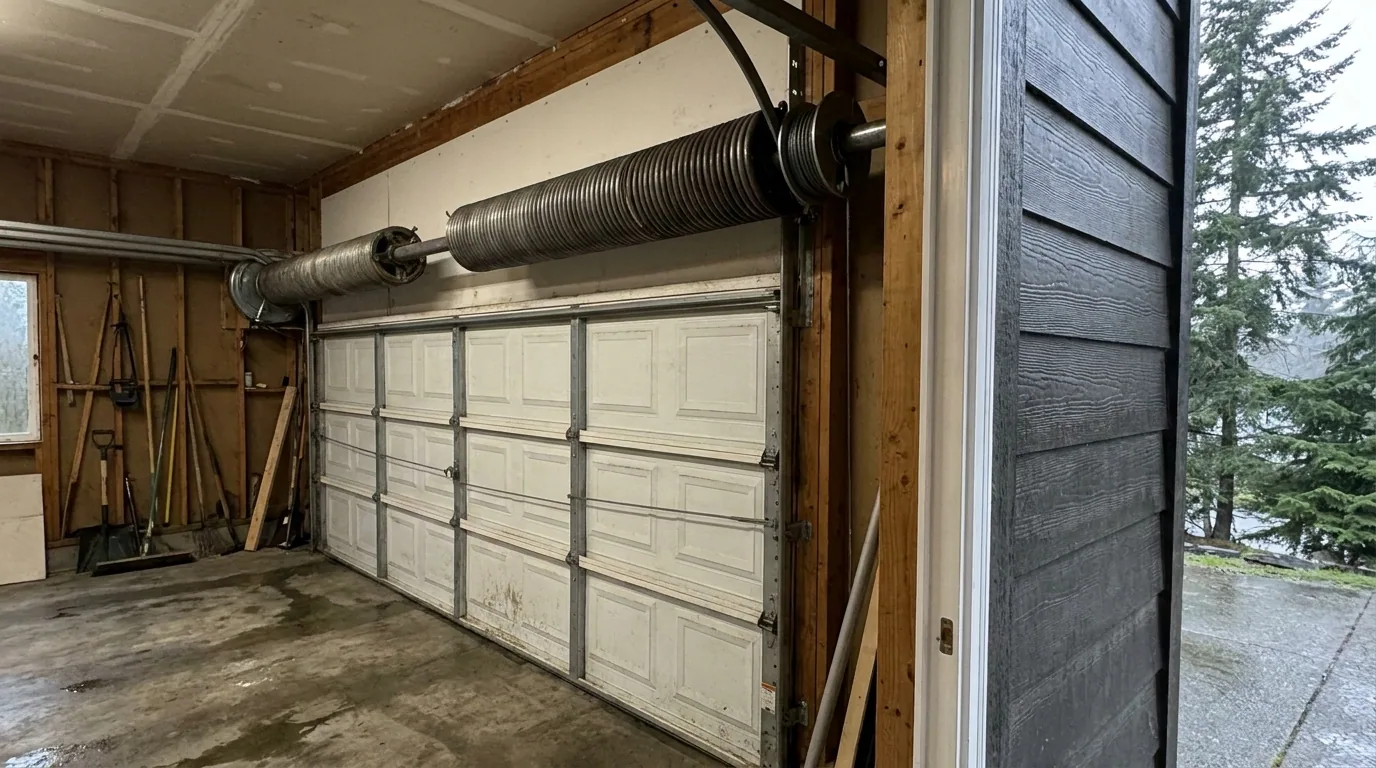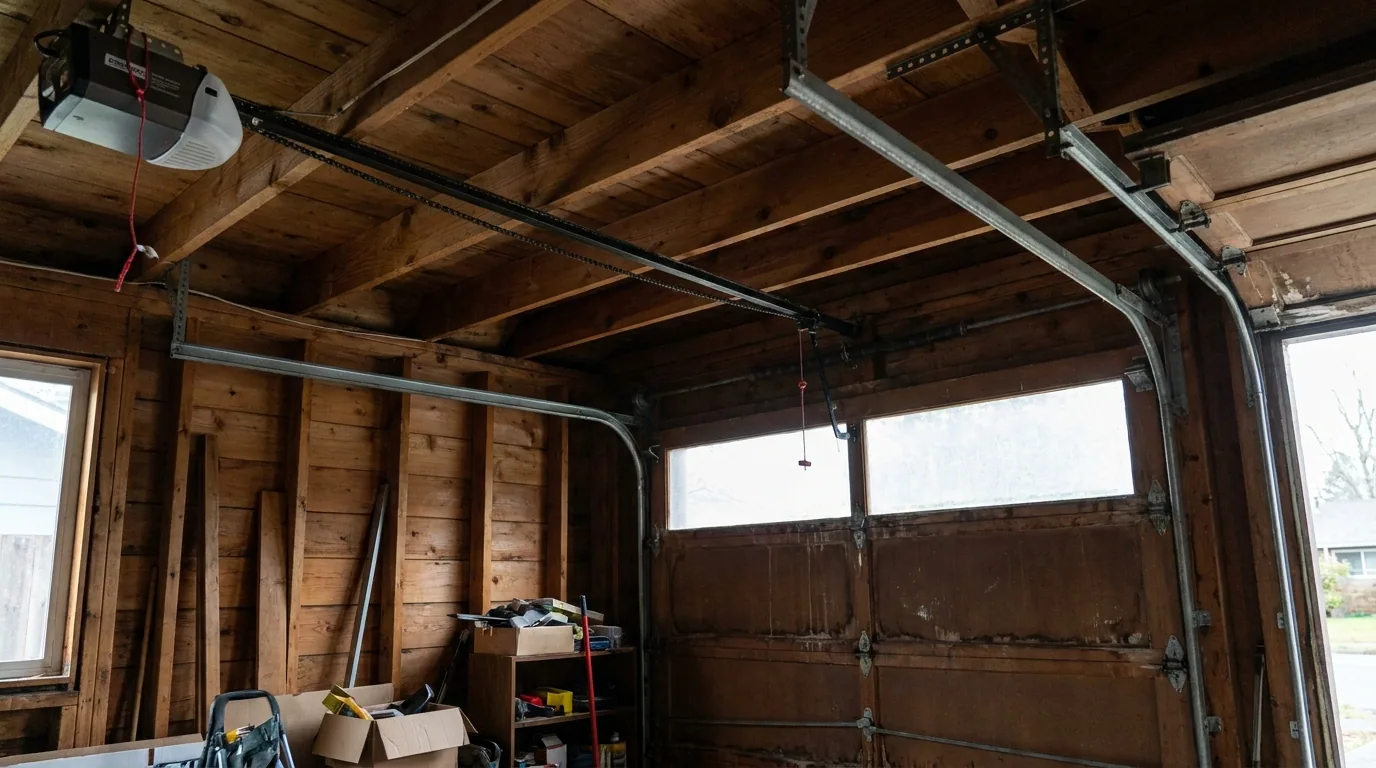
Garage door hardware in San Francisco lives in a mild climate, which is easy to mistake for a gentle one. The temperature rarely swings hard, and nothing here gets buried in snow. What the door does face is moisture that never quite dries: fog that settles in overnight and leaves a film on bare steel, and salt carried in the marine air. That combination works on exposed metal slowly and steadily, and the result is hardware that stiffens, discolors, and eventually stops moving the way it should. This article covers where that wear shows up, what a homeowner can safely observe from outside the door, and which parts belong only to a technician.
Where the weather actually bites
Salt and fog do not affect a garage door evenly. The parts that suffer first are the ones that are bare or thinly coated and open to the air: hinges, roller stems, the track surface, the springs, and the fasteners holding it all together. Painted panels usually hold up reasonably well because the finish shields the steel underneath. The hardware has no such protection, and it is where the first signs tend to appear.
In practice, a door that has spent years in a foggy neighborhood can develop hinges that no longer pivot freely, rollers that drag instead of rolling, and a track with a dull, rough film on its inner face. None of this happens overnight and none of it is dramatic. It accumulates, and the door gets a little harder to operate each season until one day it stops behaving the way it used to.
What a homeowner can safely notice
You do not need to touch the springs or the cables to know something has changed. The door tells you, if you pay attention to how it behaves during normal use.
- The door feels heavier than it used to. If you have to push harder or the opener seems to strain, the door is working against something.
- A new noise at the start of a cycle. A squeal, a grind, or a scrape that was not there before is worth noting.
- The door sits crooked in the opening. One side lower than the other, visible from outside with the garage empty.
- A gap along the top or one side. The door closes but does not meet the opening evenly.
- Visible rust or discoloration on hinges, track, or roller stems. This is surface observation only; you are not being asked to inspect the springs or cables.
Any of these can have more than one cause. A crooked door can mean a snapped cable, a broken spring, or a bent track. A squeal can come from a roller, a hinge, or a dry bearing. A door that feels heavier may have a spring problem, a binding track, or worn rollers. The point of noticing is not to diagnose it yourself; it is to have a clear description ready when you call, so the technician knows what to expect.
Why the springs and cables are technician work
Torsion springs and the cables that run alongside them are under high tension at all times. A spring that has corroded can fail suddenly, and a cable that has weakened can snap without warning. Neither is something a homeowner should handle, adjust, or try to examine closely. The same goes for the opener drive train. If the motor runs but the door does not move, that can point to a stripped gear, but confirming it means opening the unit, and that is technician work.
A technician inspects the springs and cables during a service visit, checks their condition, and confirms whether corrosion has reached the point where replacement is the right call. That is the correct division of labor: you observe the door's behavior, and the technician handles the parts under load.
What routine attention looks like
There is no way to stop fog and salt air. There is a way to keep the hardware from seizing up in response to them. A tune-up and safety inspection covers the moving parts: the technician cleans and lubricates the hinges, rollers, and track, checks the springs and cables, confirms the door is balanced, and verifies that the opener's safety features are working. For a door in a foggy neighborhood, that attention matters more than it would somewhere drier, because the hardware is fighting moisture every day.
If you notice rust forming on the hinges or the track, mention it when you call. If the door has started to feel heavier or has developed a new noise, say so. Those details help the technician arrive prepared, and they are the kind of early signal that keeps a small problem from becoming a larger one.
When to call
Call when the door stops behaving the way it used to: when it feels heavier, when it sits crooked, when it makes a noise it did not make before, or when you can see corrosion spreading on the hardware. Same Day Garage Door Repair & Service serves the Mission District, Castro, Noe Valley, Pacific Heights, SoMa, Richmond District, Sunset District, Bernal Heights, Glen Park, Marina District, North Beach, Hayes Valley, Potrero Hill, and Excelsior District, on both residential and commercial doors. The company is licensed and insured. You can reach it at (415) 992-9484 or SameDayGarageDoorOne@gmail.com, and the address is 328 Bocana St, San Francisco, CA 94110. Weekday hours are 7:00 AM to 8:00 PM, weekend hours are 8:00 AM to 6:00 PM, and emergency service is available 24/7.