Noise in a condo garage is hard to place because there are three separate things making sound in the same small space: the door and its hardware, the opener, and the building around them. A thump that seems to come from the ceiling may start at a hinge. A rattle that sounds like the door may be a pipe or a duct vibrating against a joist two feet away. Before anyone adjusts anything, it helps to sort the sound by when it happens and where it seems to originate. This article covers what you can safely observe from outside the door with the garage empty, how to tell the three sources apart, and which work belongs to a technician. Same Day Garage Door Repair & Service works on residential and commercial doors throughout San Francisco, including SoMa.
Start with timing, not volume
The single most useful thing you can note is when in the cycle the noise occurs. Stand outside the door with the garage empty and listen to a full open and a full close. Four moments matter:
- At the instant the opener starts, before the door has moved. Noise here points toward the opener or its mounting, not the door panels.
- While the door is traveling, evenly through the run. This points toward rollers, hinges, tracks, or a dry moving part.
- At one specific spot in the travel, every cycle. A single repeatable noise often tracks a joint in the track or a particular panel passing a particular point.
- After the door stops, as the assembly settles. This is often building-side: a pipe, a duct, or a framing member reacting to the vibration the cycle just put into the structure.
Write down which of those four it is. That one note will save a technician a lot of guessing, and it will tell you whether the sound is even the door's problem.
Sounds that belong to the door and its hardware
A squeal or chirp that rises and falls with the door's speed is usually a moving part. It can come from a roller with a dry bearing, a hinge pin that has lost its lubrication, or a track that has picked up grit. Those three produce similar sounds and are separated by a technician who checks each in turn; you cannot tell them apart by ear from the driveway.
A rattle that appears when the door is moving and stops when it is still is often loose hardware, but which fastener is loose is not something to guess at. A grinding or scraping that sounds like metal on metal, and that gets worse at one point in the travel, deserves prompt attention because a track that has been knocked out of alignment will wear rollers and hinges quickly. In SoMa's newer condo buildings the doors are usually standard sectional doors, and the tracks are mounted to structure that may share walls with living space above. That is worth mentioning to whoever services the door, because it affects how the work is approached.
Sounds that belong to the opener
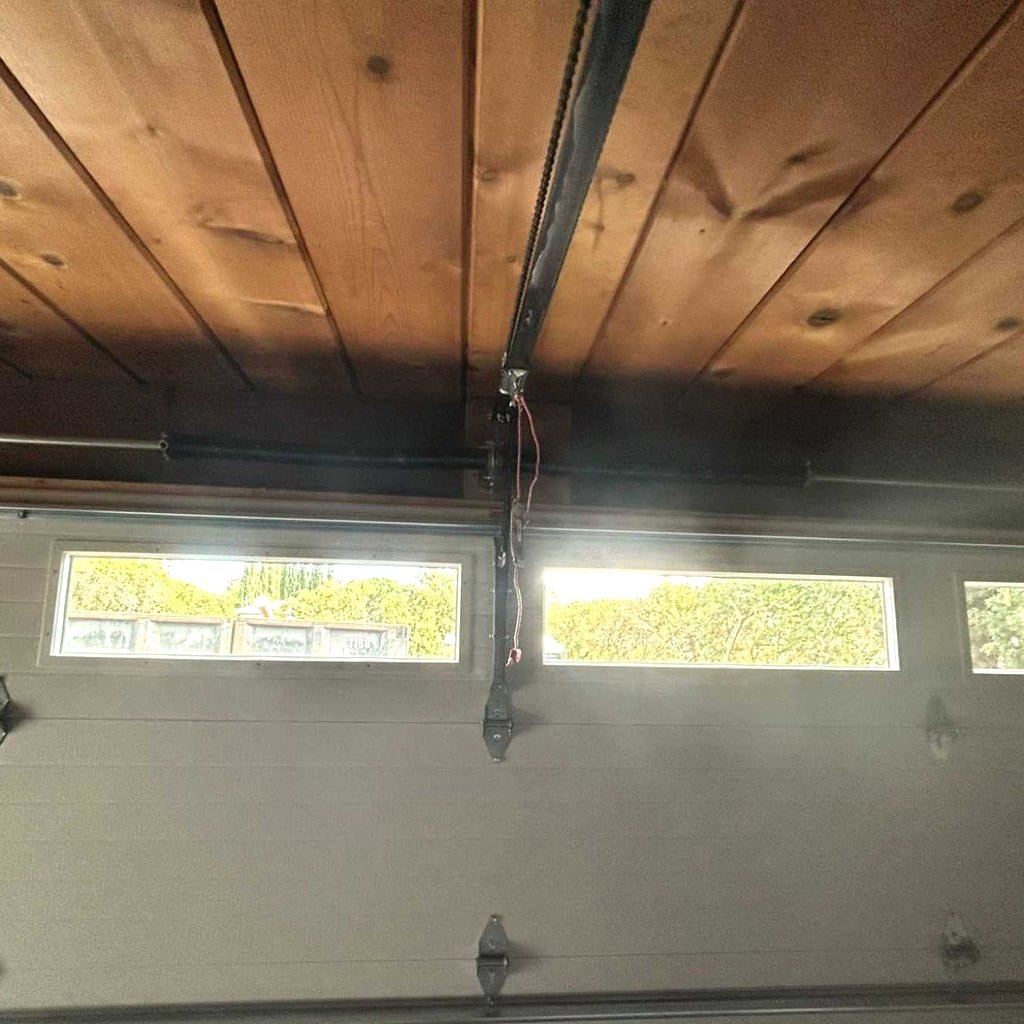
The opener is a motor, a rail, a belt or chain, and a trolley, and each can make its own noise. A rhythmic clicking or slapping that matches the motor's speed often comes from the drive chain or belt rather than the door. A single hard clunk at the start of each cycle can come from the trolley taking up slack, or from the opener's mounting hardware transmitting vibration into the ceiling structure.
One behavior is worth separating out clearly: if the motor runs and hums but the door does not move at all, a stripped gear inside the opener is one certain possibility, and it is technician work. Do not open the opener housing or reach into the drive train. Note whether the motor runs without movement, or whether the door moves and the noise comes with it, and report that.
Sounds that belong to the building
In a condo building, the garage ceiling is often the floor of something else. A noise that seems to come from the door but continues for a second after the door stops, or that you also hear faintly in another part of the building, may be a pipe, a duct, or a joist reacting to vibration rather than a door component at all. This is common where the opener is hung from framing that carries other services.
You can narrow this without touching the door. Run the opener and listen from just outside the garage door rather than underneath it, then listen again from the nearest interior space on the other side of the shared wall or ceiling. If the sound is clearly louder on the building side than at the door, the door may be the source of the vibration while the building is the source of the noise. That distinction changes who needs to look at it.
What to leave to a technician
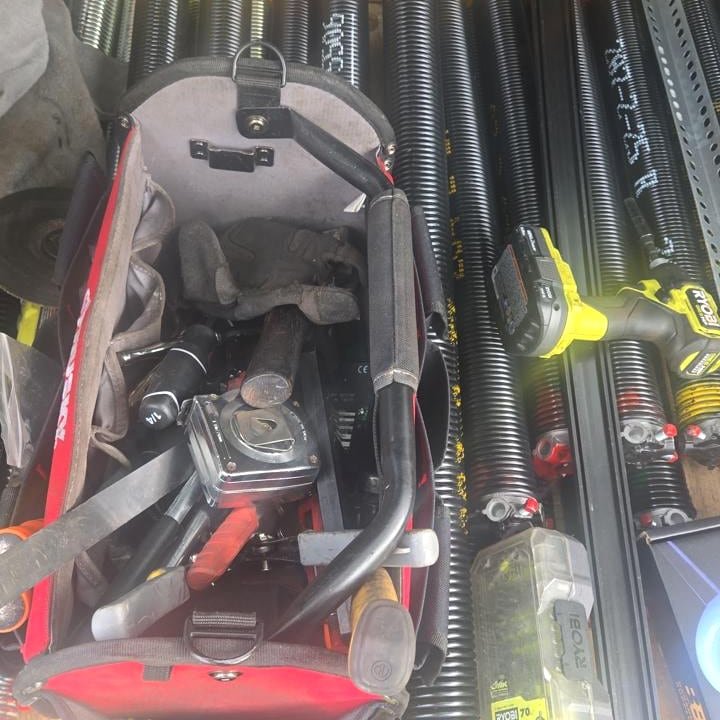
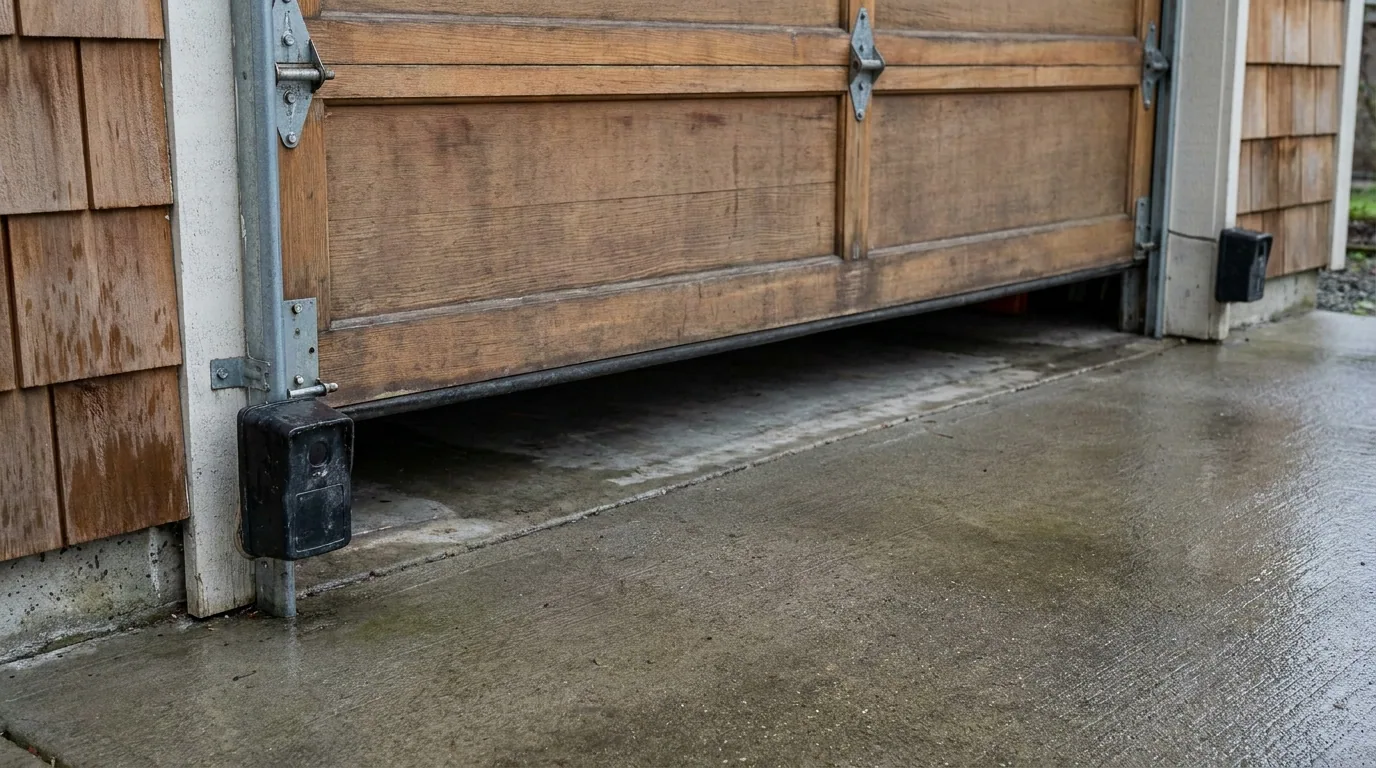
Anything involving the springs, the cables, or the opener's internal drive train is technician work, and that includes inspecting them. A technician checks the springs and cables, the track alignment, the roller and hinge condition, and the opener's mounting and drive. What you can do safely is observe from outside the door with the garage empty: whether the door sits crooked in the opening, whether there is a gap along the top when it is closed, whether it feels heavier than usual in normal use, and when in the cycle the noise occurs.
If the door sits crooked, that can mean a snapped cable, a broken spring, or a bent track, and only an on-site check separates them. If the door feels heavier in normal use, that points toward spring or balance work, which is not a homeowner task. If the opener runs without moving the door, that is the stripped-gear possibility above. In each case, the useful thing you contribute is the observation, not the repair.
Same Day Garage Door Repair & Service is licensed and insured and handles garage door repair, opener repair, tune-ups and safety inspections for residential and commercial customers across San Francisco, including SoMa, the Mission District, Potrero Hill, Hayes Valley and the surrounding neighborhoods. The company can be reached at (415) 992-9484 or SameDayGarageDoorOne@gmail.com, and its address is 328 Bocana St, San Francisco, CA 94110. Hours are Monday through Friday 7:00 AM to 8:00 PM and Saturday and Sunday 8:00 AM to 6:00 PM, with 24/7 emergency service.