In many pre-1970 San Francisco buildings, the garage opening is not simply a hole cut in a wall. The header that spans it often carries part of the structure above, and the jambs and side walls do their share of holding the assembly together. That becomes relevant the moment someone proposes to drill into the header to hang an opener bracket, anchor a track, or run a wire. What reads as a straightforward mounting job can turn into a structural question. This article covers what you can safely observe from outside the door with the garage empty, how to recognize the clues that suggest the opening deserves a closer look, and which work belongs to a technician or a structural professional rather than a homeowner with a drill.
Why an older garage opening is different
Garages built before 1970 in this city were framed for cars far smaller than today's, and many were tucked under the living space rather than built as separate structures. The opening was framed to carry whatever sits above it — a floor, a stair, sometimes a whole facade. The original door hardware was sized to that opening, and the header was sized to the building. When a later owner hangs a heavier door or adds an opener, the loads change, and the header is the part that feels it. None of that is visible from the street, which is why the observations below matter: they are the signs that the opening deserves a closer look before anything is fastened to it.
What you can see from outside the door
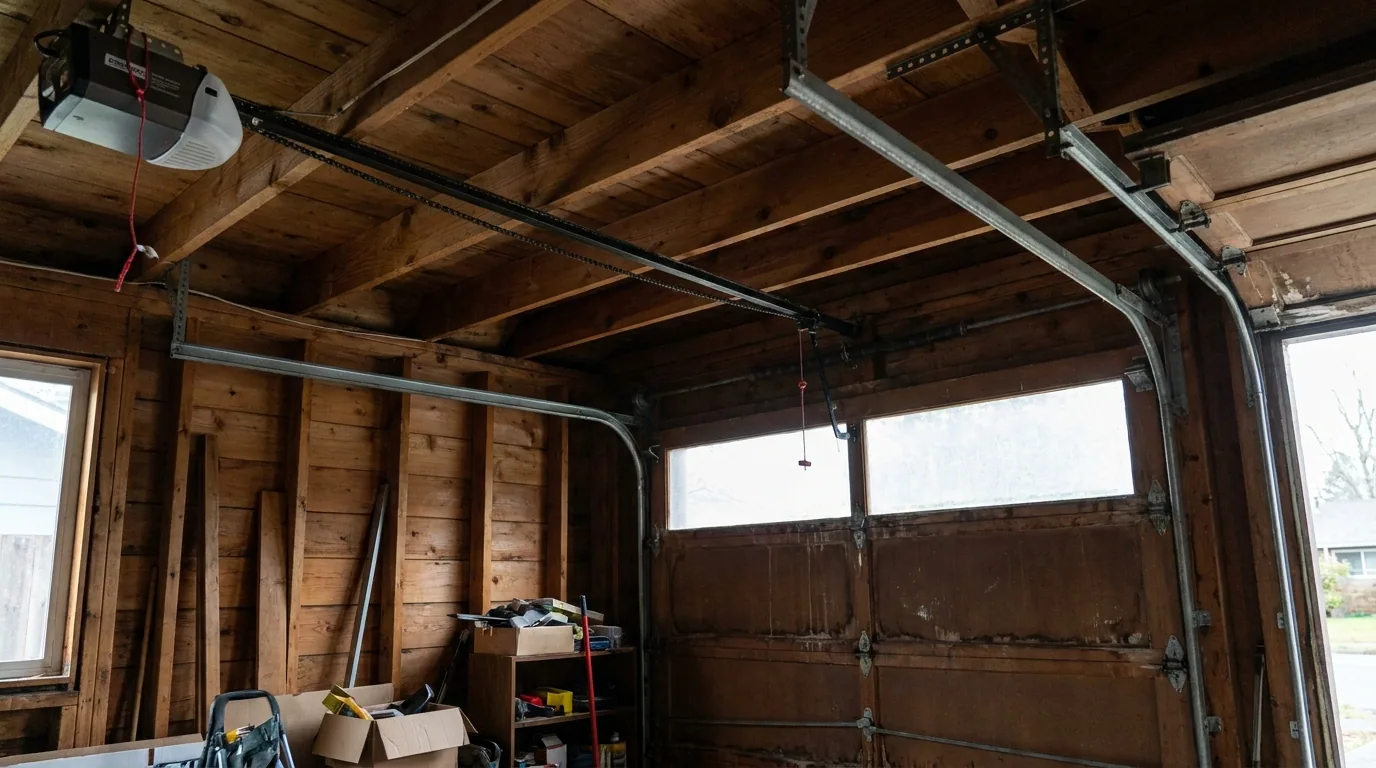
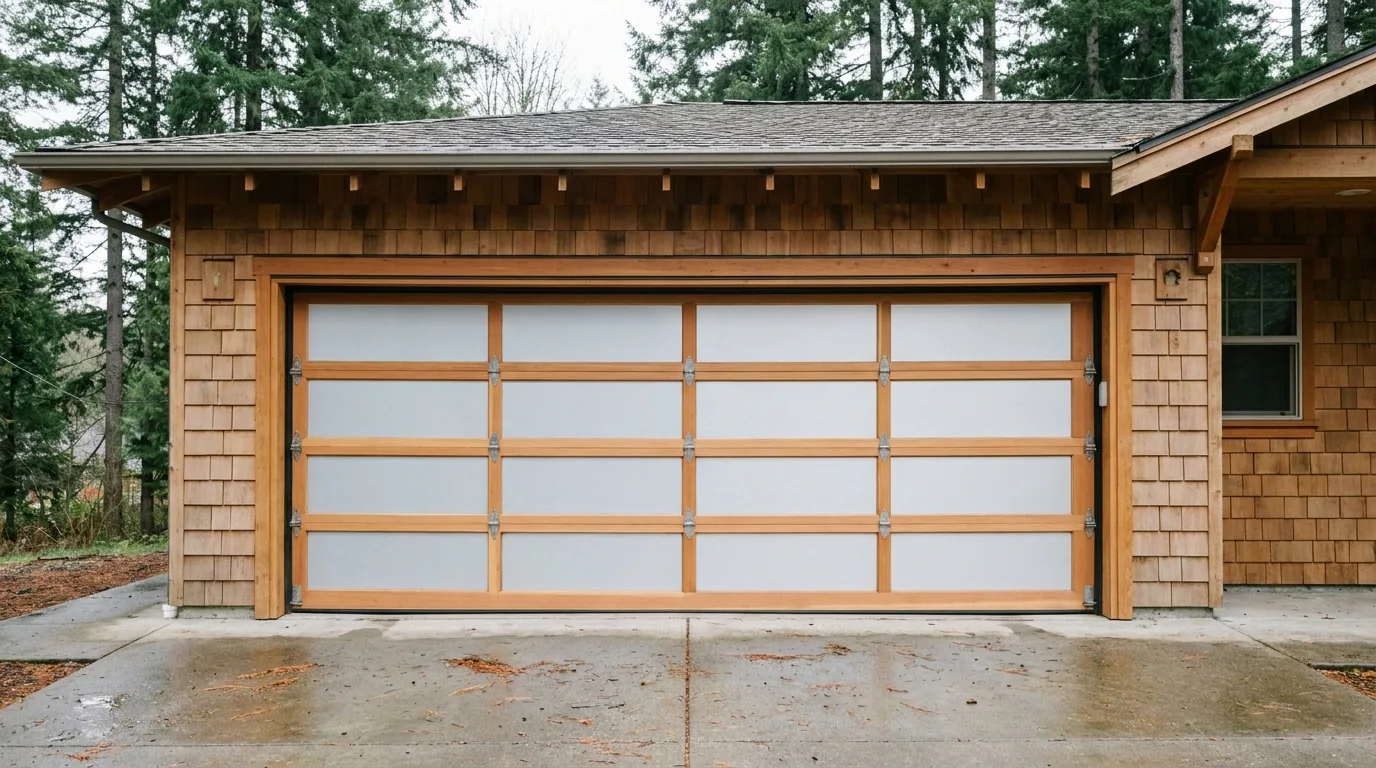
With the garage empty and the door closed, stand back and read the opening as a whole. You are not diagnosing a mechanism here; you are reading the building.
- A sagging or bowed header. The beam above the opening should read as a straight line. A visible dip at the center is worth noting.
- Cracks at the corners of the opening. Diagonal cracks running from the top corners of the garage opening outward into the wall are a common sign that the opening is moving.
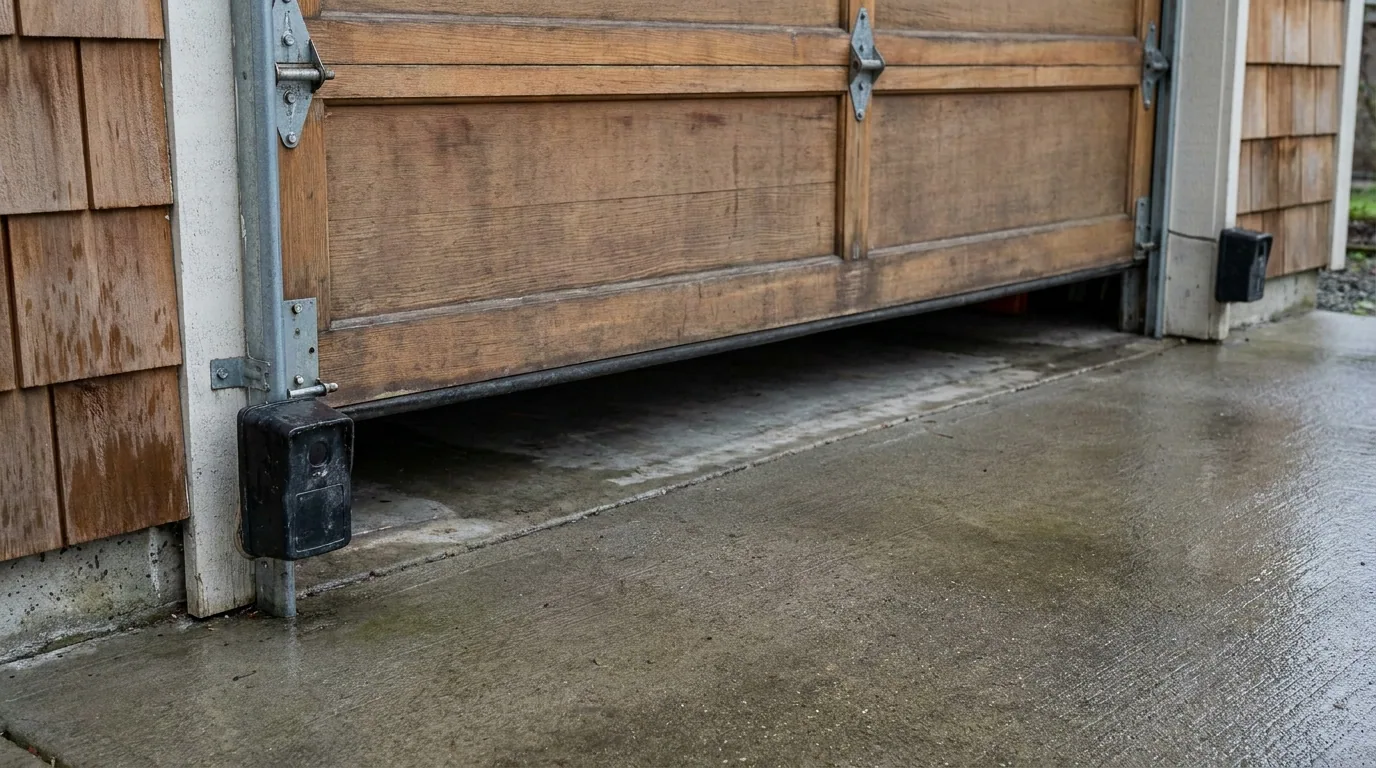
- A gap along the top of the door. If the door sits closed but daylight shows along the header, the opening or the door has shifted.
- Track that is no longer plumb. A vertical track that leans, or one that has visibly pulled away from the wall at its fasteners, tells you the mounting surface has moved.
- A door that sits crooked in the opening. A door hanging at an angle can mean a snapped cable, a broken spring, or a bent track — several possible causes, and the technician's inspection separates them.
- A door that feels heavier than it used to when you operate it normally, or a new noise at the start of a cycle.
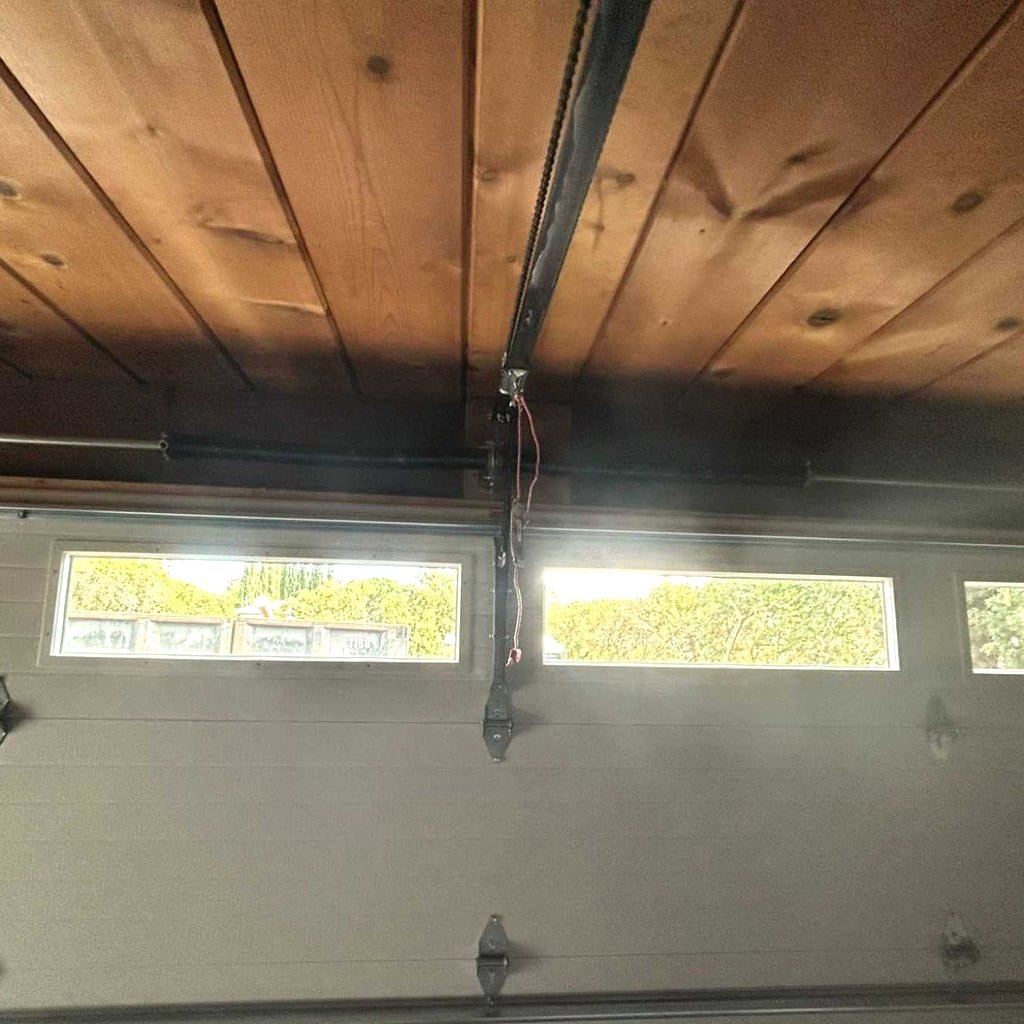
None of these observations tells you on its own that the header is failing. They tell you the opening is worth examining properly before anyone adds new holes or new load to it. The condition of the wood where the track is anchored — whether it has compressed, split, or pulled around old fasteners — is part of that examination, and it is technician work, not something to probe at yourself.
Track damage versus header damage
Track and header problems look similar from the driver's seat and are very different in what they require. Track damage is usually local: a bent section, a roller that has jumped, a fastener that has worked loose in old wood. Header damage is structural, and it shows up as movement in the opening itself — the sag, the corner cracks, the gap that will not close no matter how the door is adjusted. A useful thing to watch is whether a problem comes back after the door has been adjusted. A track that can be brought back to plumb and stays there is behaving like hardware. An opening that keeps pulling the track back out of line is telling you something else. That distinction is one a technician can make on site; it is not something to settle by tightening bolts yourself and hoping.
Before anyone drills
The specific risk in a pre-1970 building is that a new fastener goes into a header that is already carrying load and may already be compromised. Drilling a bracket into a sound header is routine. Drilling into a header with a hidden split, or into a beam that has been notched by an earlier alteration, is not. If your observations turn up a sag, corner cracks, or a track that keeps pulling loose, the right sequence is to have the door and its mounting inspected before new hardware is installed, and to have a structural question answered by someone qualified to answer it. The door work and the structural question are separate, and it helps to know which one you are facing. The same care applies to springs, cables, and the opener's drive train: those are technician territory and should never be handled by a homeowner.
What a technician checks
A technician inspecting an older opening looks at the door's hardware and at how it meets the building. That includes the springs and cables, the track alignment and its fasteners, the rollers and hinges, and the condition of the wood or masonry the track is anchored to. The technician also checks whether the opener's mounting and the door's travel suit the opening as it actually is, not as it was drawn. Where the inspection points to movement in the opening itself, that finding gets referred on rather than covered over with new brackets. If you are in the Mission District, Bernal Heights, Noe Valley, Potrero Hill, or any of the older neighborhoods where these buildings are common, and you are planning to add an opener or re-hang a track, it is worth having that look done first. Same Day Garage Door Repair & Service is licensed and insured and works on residential and commercial doors throughout San Francisco. You can reach the team at (415) 992-9484 or SameDayGarageDoorOne@gmail.com, or at 328 Bocana St, San Francisco, CA 94110. Weekday hours are 7:00 AM to 8:00 PM, weekends 8:00 AM to 6:00 PM, with 24/7 emergency service.