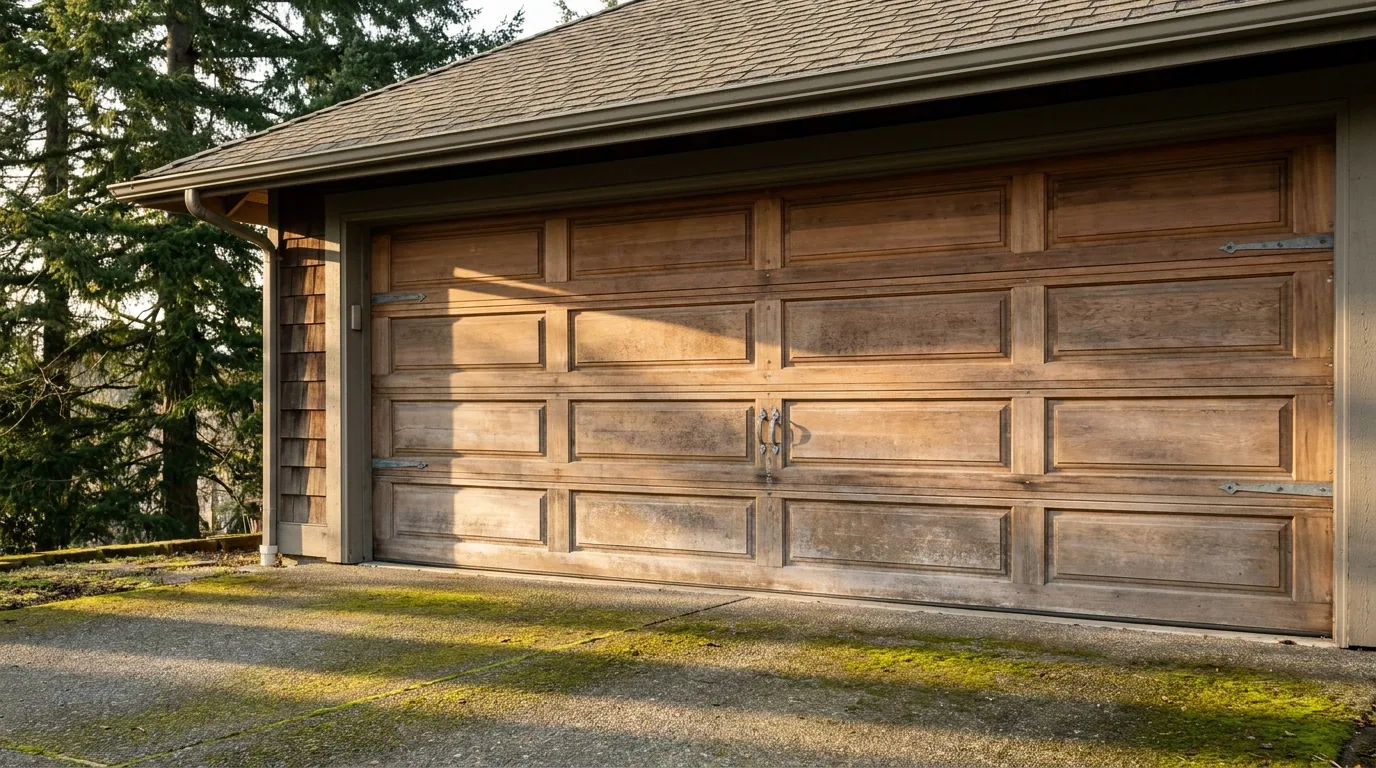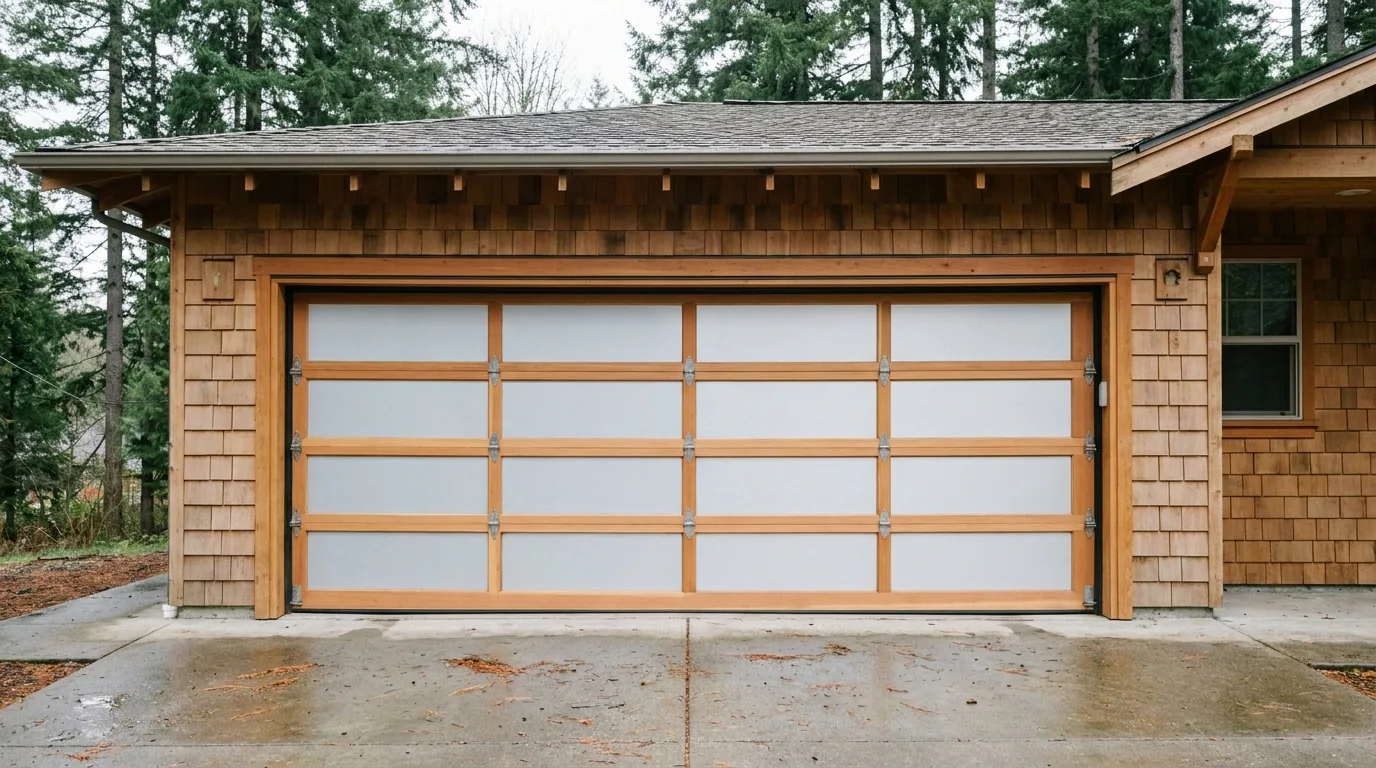
Older buildings around San Francisco often still have their original timber garage doors: single-panel tilt-ups, or two leaves that swing or slide, hung on hardware that has been carrying them for a very long time. When one of these doors starts to drag, bind, or sit crooked, the first instinct is often to replace it. In most cases that is the most expensive answer to a problem that is really about adjustment. Timber moves with the seasons, hinges wear, tracks settle, and a door that was hung true decades ago can drift out of line without anything being broken. This article covers what a homeowner can safely notice from outside the door with the garage empty, how to tell adjustment problems from real damage, and where the work belongs to a technician. It applies to the timber doors on older buildings as well as to the sectional doors found on newer construction.
Why timber doors drift out of adjustment
A timber door is a set of boards and frames held together by joints, hinges, and hardware, and wood does not stay the same size. It swells and shrinks with moisture, and over years the cumulative effect shows up as a door that no longer sits square in its opening. Hinges wear at the pin. Screws work loose in old wood. The track or the pivot hardware settles, especially where the building itself has moved. None of that means the door is finished. It means the door and its hardware are no longer in the relationship they were installed in, and that relationship can usually be restored.
What a homeowner may notice is that the door feels heavier in normal use, that it catches or scrapes at one corner, or that a gap has opened along the top or one side. Those are adjustment symptoms. They are worth describing carefully to a technician, because the description narrows down which part of the assembly has moved.
What you can see from outside the door
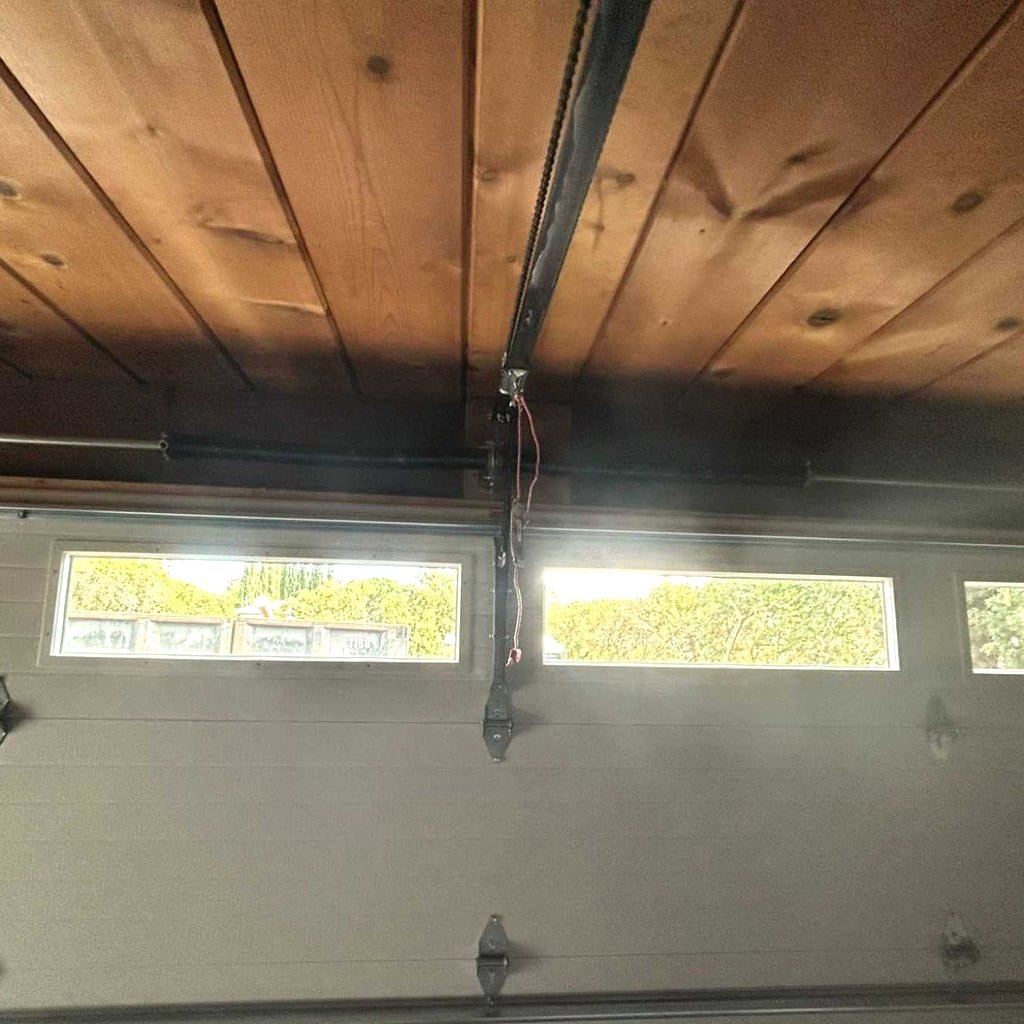
With the garage empty and the door closed, stand back and look at the door as a whole. You are looking for the door sitting crooked in its opening, a visible gap along the top or down one side, or a panel that has pulled away from its frame. Run the door through one normal cycle from the outside and listen. A new scrape, a knock at the start of travel, or a squeal that was not there before tells a technician where to start.
Do not lift the door by hand to feel its weight, do not test the balance yourself, and do not pull the emergency release and move the door manually. On a tilt-up or single-panel door those actions can let a heavy door come down uncontrolled. The technician checks the springs, cables, hinges, and pivots, and assesses the balance as part of the adjustment.
Adjustment versus replacement
The question is not whether the door looks old. It is whether the structure of the door is sound. A technician looks at the frame, the stiles and rails, the joints, and the hardware. Rot in the bottom rail or a delaminated panel is a repair question. Loose hinges, a track out of plumb, or hardware that has shifted are adjustment questions. A door with sound timber and worn hardware is a strong candidate for adjustment and re-hanging rather than replacement, and keeping the original door preserves the look of the building.
Where the door is beyond adjustment, that is a decision to make with the technician's assessment in hand, not before.
Low-clearance openings and tight side setbacks
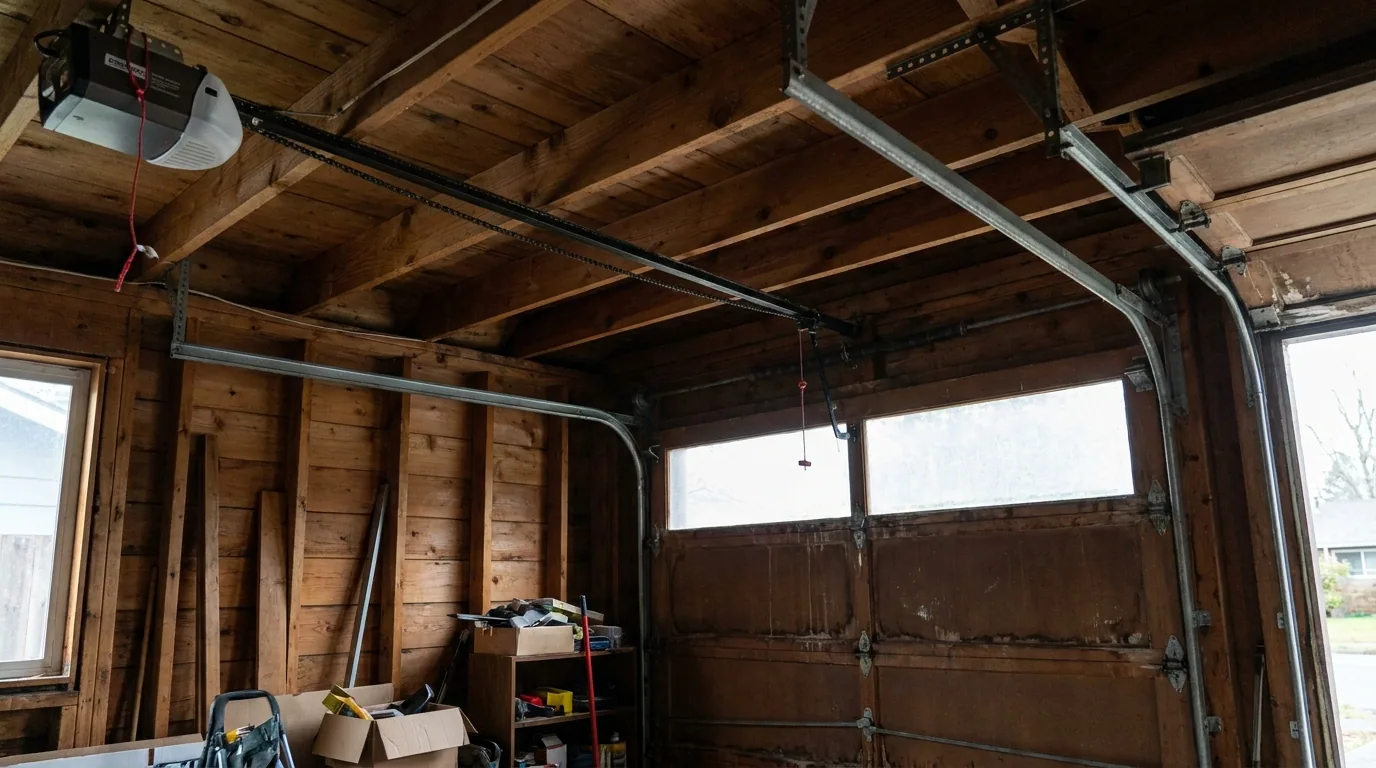
Many older buildings have garage openings with very little headroom and narrow side setbacks, which limits how the door and its hardware can travel. A tilt-up door in a low opening has less room for error in its pivots and track than a modern sectional door does. When something is out of adjustment in that kind of opening, the door can bind against the frame or the header rather than simply running rough. That is one more reason adjustment matters: in a tight opening, a small misalignment has less room to be absorbed.
When the opening itself needs a careful look
In pre-1970 buildings the garage opening often carries structural load, and the header and track are part of that. If you see cracking in the masonry or plaster around the opening, a header that has sagged, or track that has pulled away from the wall, stop and have it looked at before anyone drills or re-anchors anything. That is not a homeowner repair, and it is not something to work around with a quick fix to the door. A technician can assess the door and its hardware and tell you when the opening itself needs a closer look before the door work proceeds.
If your timber door is dragging, sitting crooked, or sounding different than it used to, the place to start is an assessment rather than a replacement quote. Same Day Garage Door Repair & Service works on residential and commercial doors across San Francisco, including the Mission District, Castro, Noe Valley, Pacific Heights, SoMa, Richmond District, Sunset District, Bernal Heights, Glen Park, Marina District, North Beach, Hayes Valley, Potrero Hill, and Excelsior District. The company is licensed and insured and can be reached at (415) 992-9484 or SameDayGarageDoorOne@gmail.com, with weekday hours of 7:00 AM to 8:00 PM, weekend hours of 8:00 AM to 6:00 PM, and 24/7 emergency service.