A garage door that lifts roughly a foot off the floor and then stops is one of the more common calls we take. It is also one of the more misunderstood, because the behavior looks like a door that is stuck when it is usually a door that has been told to stop. The opener is doing what its controls or its load tell it to do. Your job is to narrow down which of those it is, using only what you can see and hear from outside the door with the garage empty. This article walks through the common causes, the tests that separate them, and the point where a technician takes over. It applies to the sectional doors on newer buildings around San Francisco and to the tilt-up and single-panel doors still on many older ones.
Start by listening to the opener
Before anything else, run one cycle and pay attention to the motor. The sound splits the diagnosis in half.
- The motor runs for a second or two, then stops. The unit has power and the motor is turning. Something is telling it to stop, or it is meeting resistance it is set to back off from.
- The motor runs continuously but the door does not move. The drive is turning without engaging the door. That points toward the drive train, the carriage, or a released trolley rather than a travel setting.
- Nothing happens at all. No motor sound, no click. That points toward power, the wall button, the safety circuit, or the logic board.
Each of these leads somewhere different, so make the observation before you do anything else.
When the motor runs and then stops
This is the most common version of the problem, and it has several possible causes. Do not assume the first one you read about is yours.
Travel limits set too short
Openers use adjustable open and close limits. If the open limit is set only a foot or so above the floor, the door will rise to that point and stop as though nothing were wrong. This is a setting, not a failure, and it is common after a door has been serviced or an opener replaced. A technician can confirm and reset it.
Force settings backing off
Modern openers monitor resistance. If the door meets more resistance than the force setting allows, the opener reverses or stops to avoid straining the mechanism. A door that has become harder to move will trip that setting even though the setting itself has not changed. The question then becomes why the door is harder to move.
A spring that can no longer carry the door
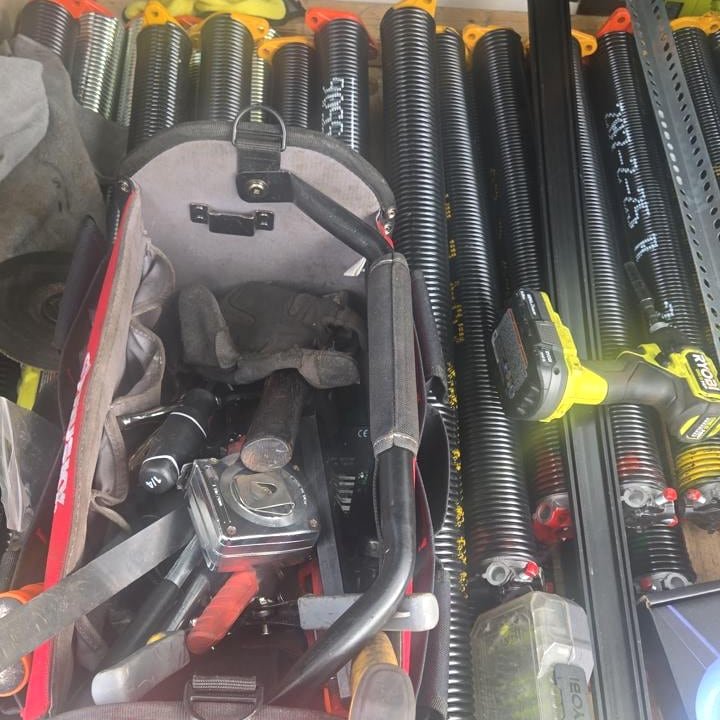
Torsion and extension springs carry most of the door's weight. A broken torsion spring cannot hold the door, and a door with a failed spring will feel much heavier in normal use. It may rise a short distance under opener power and then stall. The technician inspects the springs and cables; you should not. What you can notice from outside is that the door feels heavier when you use it normally, or that it no longer stays up the way it used to.
A door binding in its tracks
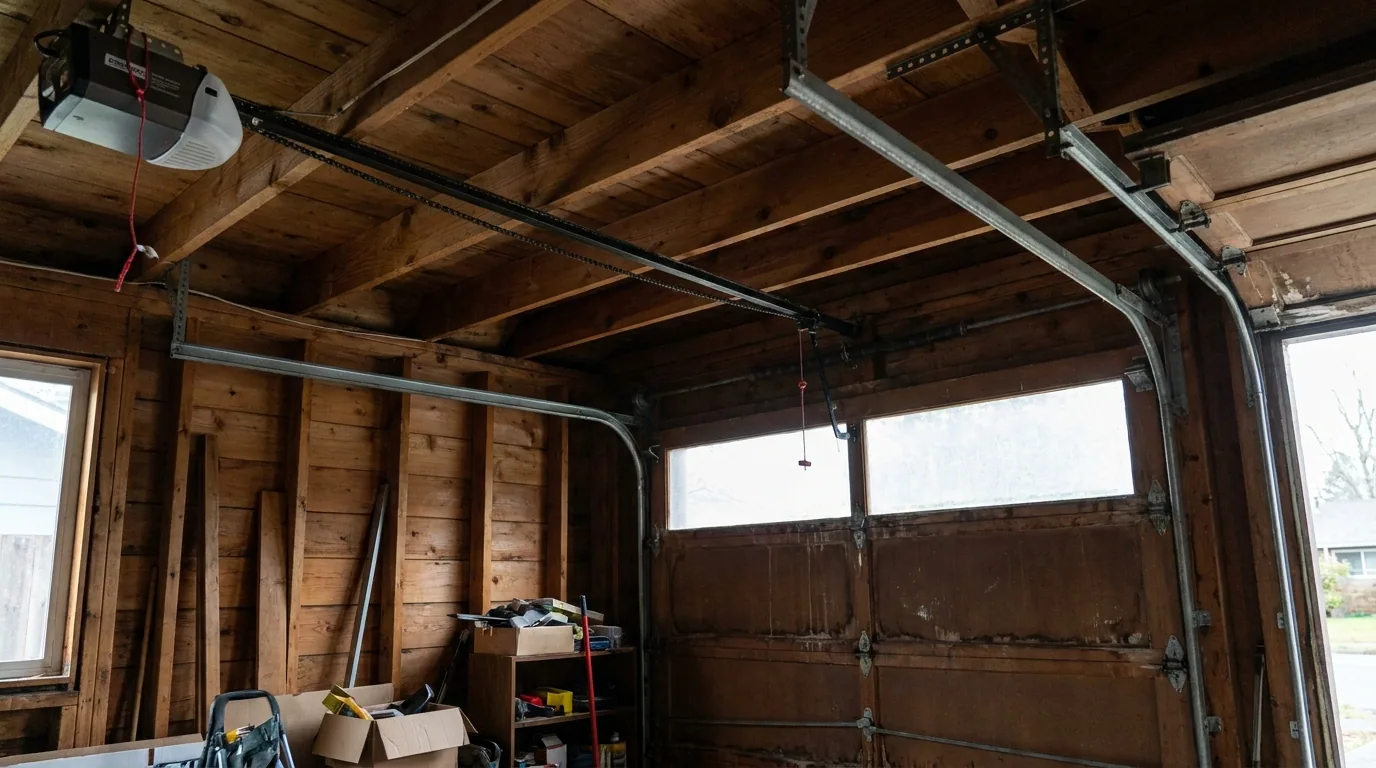
A roller out of its track, a bent section, or a track knocked out of alignment can make the door bind a foot or so up. On older buildings with narrow side setbacks and tight alleys, tracks take a lot of incidental contact. A technician checks alignment and roller condition.
To separate these, watch the door as it rises. If it lifts smoothly and stops cleanly at the same height every time, suspect a limit setting. If it strains, shudders, or slows before stopping, suspect load or binding. If it stops at a different height each time, suspect force settings or an intermittent binding point. That pattern is the useful information, not a guess at the cause.
When the motor runs but the door does not move
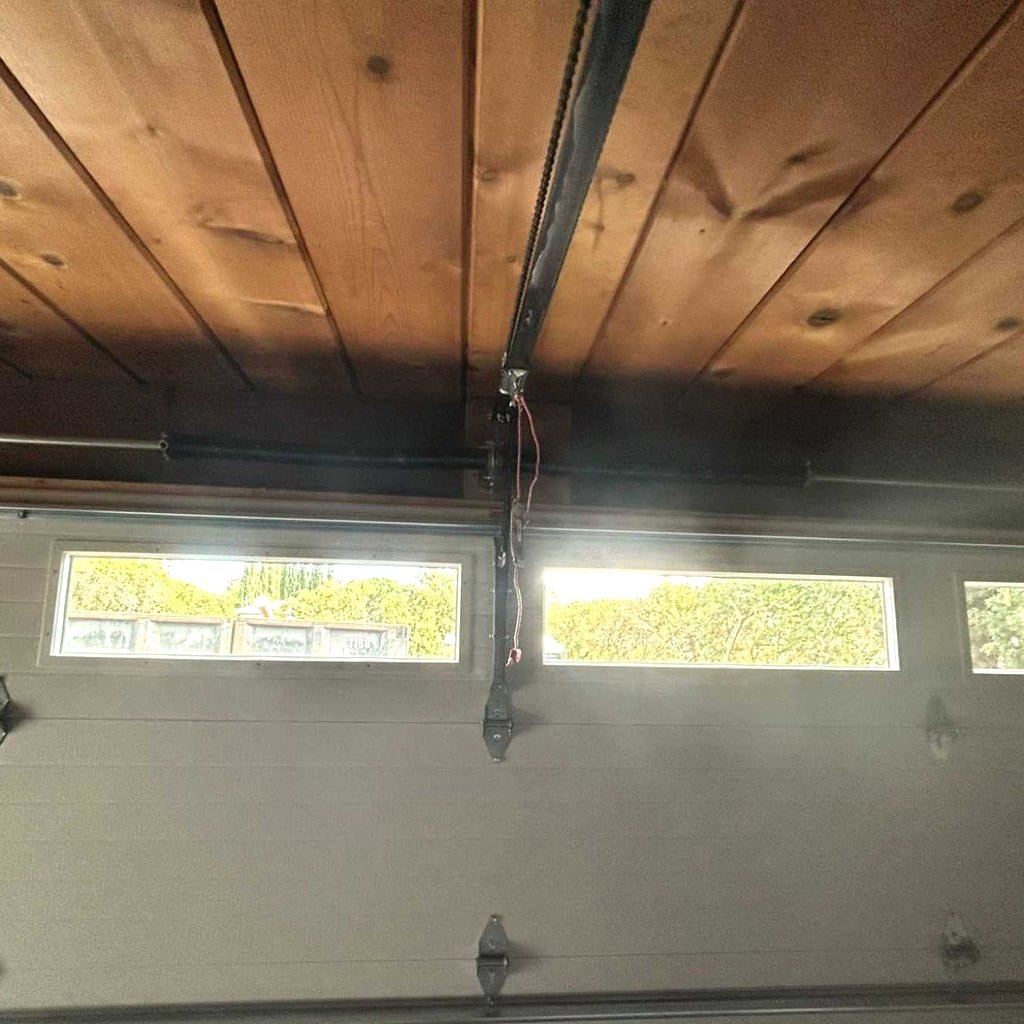
If the motor turns and the door stays put, the drive is not engaging the door. On a chain or belt opener, a stripped gear in the drive unit lets the motor spin without moving the carriage. A trolley that has been released from the carriage, or a carriage that has come loose, produces the same symptom. These are mechanically certain failures of the drive train, and they belong to a technician. Do not reach into the opener housing or the rail.
When nothing happens at all
No sound from the motor points away from the door and toward the controls. Check the obvious first: the breaker, the outlet the opener is plugged into, and whether the wall button works. If the opener has a lockout feature, confirm it is not engaged. Beyond that, the safety circuit and the logic board are technician territory.
One thing worth clearing up: the photo-eye is a safety device on the closing travel only. A blocked or misaligned beam reverses a door that is coming down. It has no role in a door that will not start or that stops a foot into opening. If your door reverses before it reaches the floor on the way down, that is a travel-limit or force-setting issue, not a photo-eye issue.
What to do before you call
Note the height at which the door stops, whether it is the same every time, whether the motor runs, and whether the door feels heavier than usual in normal use. That information saves time on the diagnosis. Leave the springs, cables, and opener drive train to a technician; those parts store energy and are not homeowner work. If you are in the Mission District, Castro, Noe Valley, Pacific Heights, SoMa, Richmond District, Sunset District, Bernal Heights, Glen Park, Marina District, North Beach, Hayes Valley, Potrero Hill, or Excelsior District, Same Day Garage Door Repair & Service can take a look. The company is licensed and insured and can be reached at (415) 992-9484 or SameDayGarageDoorOne@gmail.com. The address is 328 Bocana St, San Francisco, CA 94110. Weekday hours are 7:00 AM to 8:00 PM, weekend hours are 8:00 AM to 6:00 PM, and 24/7 emergency service is available.