A steep driveway is one of the quiet stresses on a garage door system, and it does its work slowly. The opener is asked to start the door moving, stop it cleanly, and hold it at the top of every cycle. On a slope, the door spends more of each cycle under load, and the parts that carry that load wear differently than they would on a flat approach. This article explains what a slope changes about the way the door runs, what a homeowner can safely notice from outside the door with the garage empty, and which checks belong to a technician. It applies to the sectional doors on newer buildings around San Francisco and to the tilt-up and single-panel doors still on many older ones.
The opener is not lifting the whole weight
On a properly adjusted door, the springs carry most of the door's weight and the opener mostly starts, stops, and guides it. That balance is set for the door and the hardware, not for the driveway. A slope does not change the spring setting, but it does change how often the door is asked to work against a load it was not adjusted for, and how much the opener has to do when the balance has drifted.
What a homeowner may notice is that the door feels heavier in normal use, or that the opener sounds like it is working harder at the start of a cycle than it used to. Those are observations, not diagnoses. The technician checks the spring balance and the opener's force settings together, because a door that has drifted out of balance and an opener set too aggressively can produce the same complaint.
Why the start and stop of each cycle matter more on a slope
Every cycle has two moments of stress: when the door starts moving and when it comes to rest. On a steep approach, the door's travel and the way it settles at the bottom can put more demand on the opener's travel limits and force settings. If those settings are at the edge of their range, the door may stop short, reverse before it reaches the floor, or fail to close fully.
A door that reverses before it reaches the floor is a travel-limit or force-setting problem, not a photo-eye problem. The photo-eye is a safety device on the closing direction only, and it reverses a door that is closing while it is closing. It has no role in a door that will not start, opens a little and reverses, or stops short. If the door reverses partway down, the technician checks the travel limits and force settings first, then looks for a mechanical bind in the track or rollers.
What a steep driveway does to the track and the door's alignment
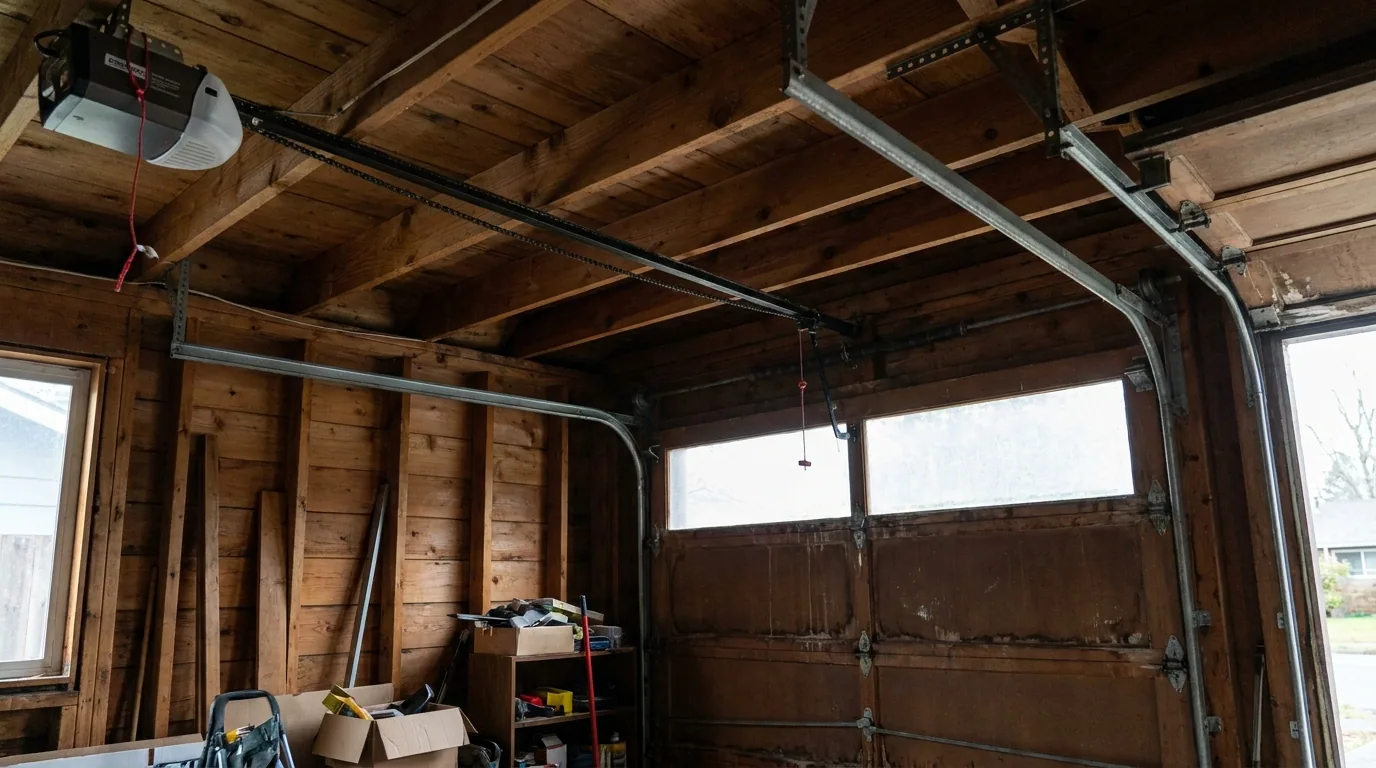
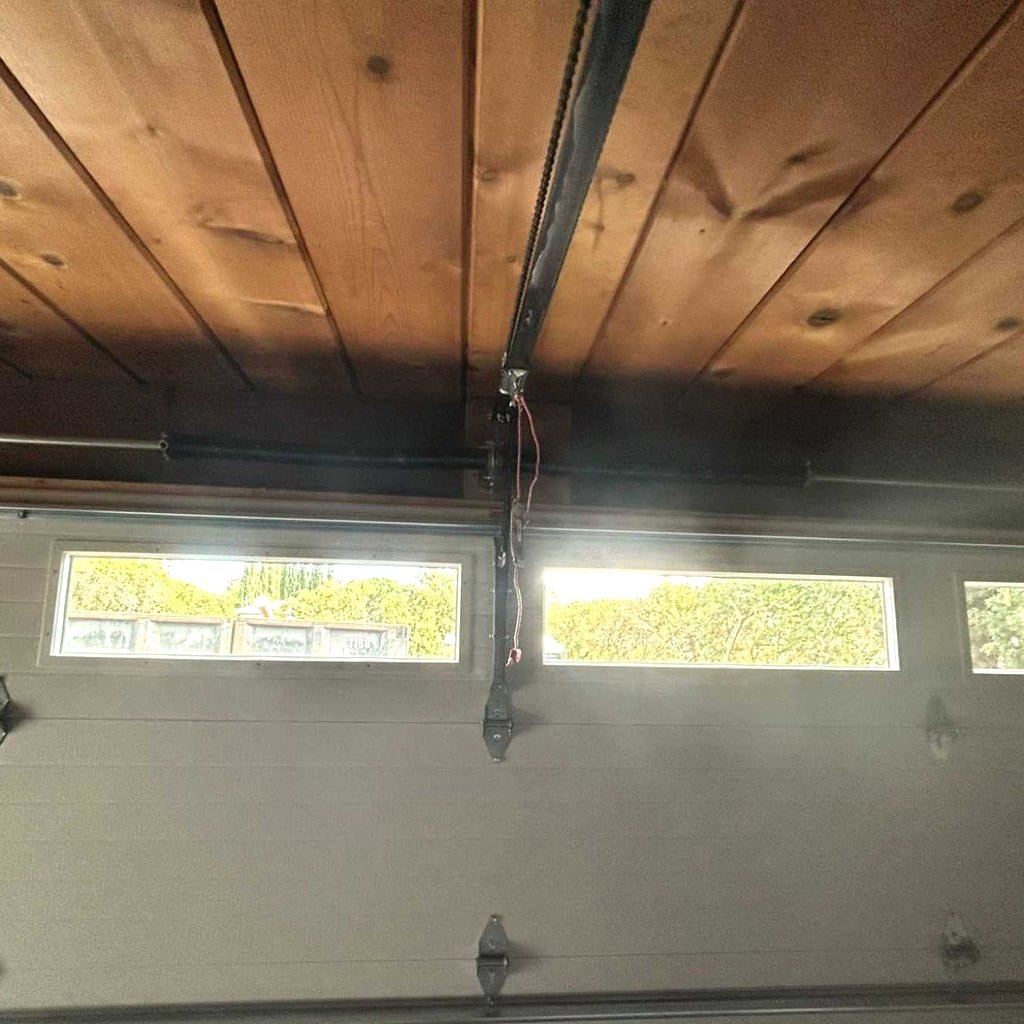
The track guides the door, and on a slope the door's weight and travel put different loads on the track than on a flat approach. A track that has shifted slightly can make the door bind, and a bind makes the opener work harder at the start of every cycle. From outside the door with the garage empty, a homeowner may notice the door sitting crooked, a gap along the top when the door is closed, or a new noise at the start of a cycle.
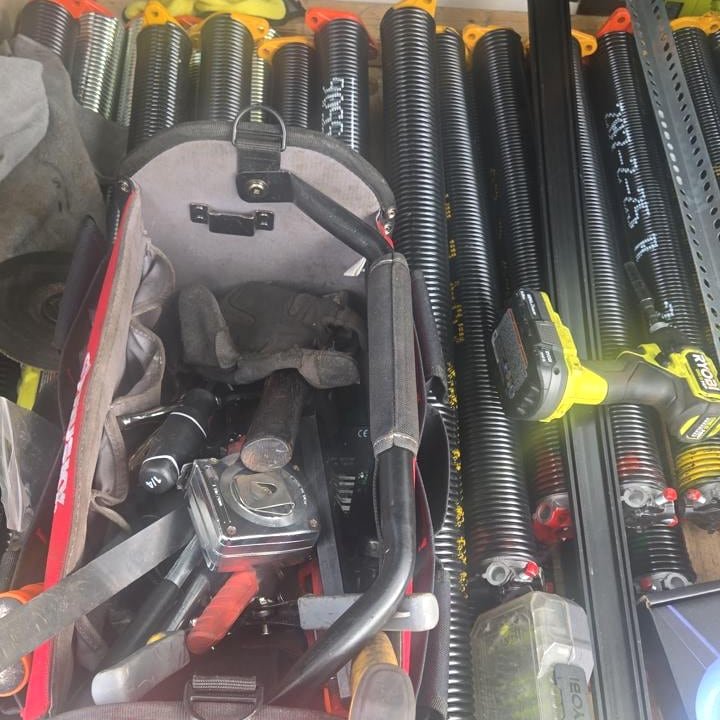
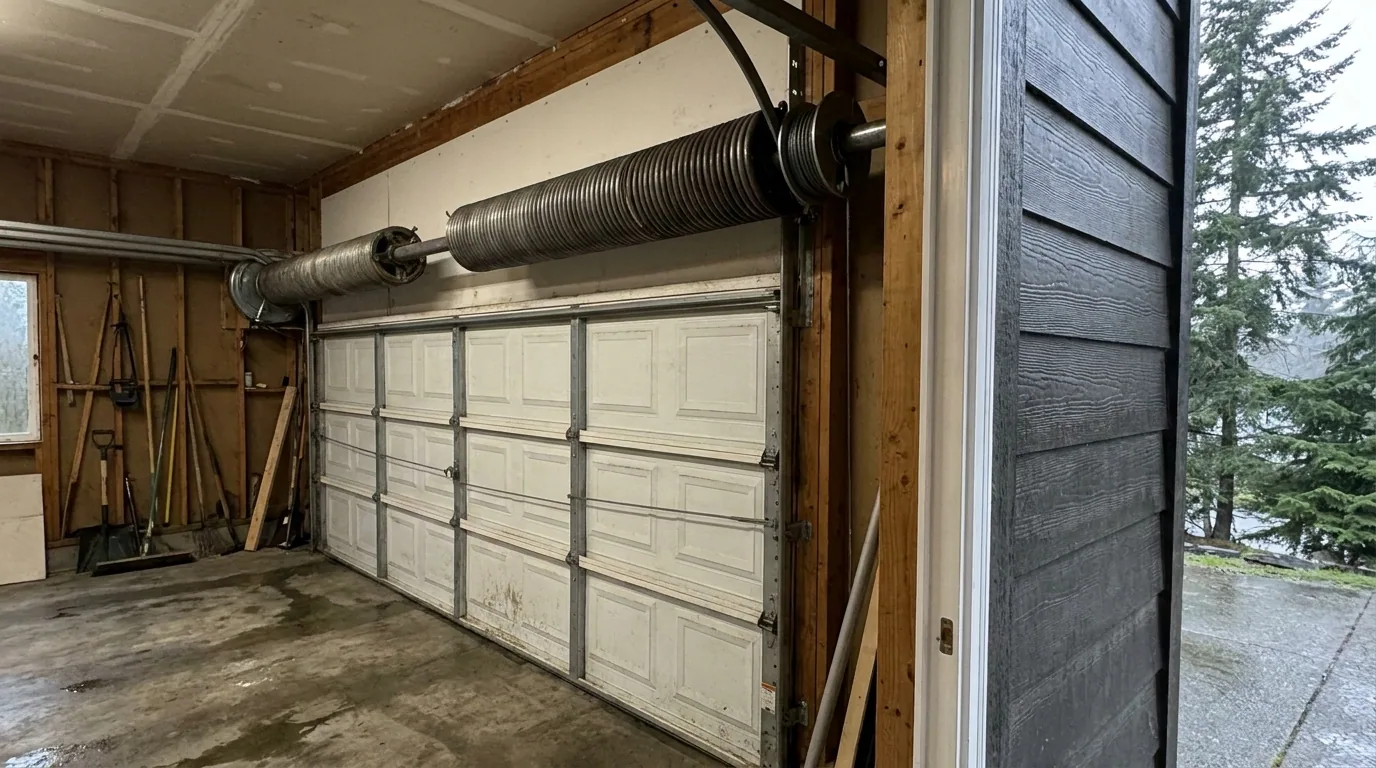
A crooked door has several possible causes: a snapped cable, a broken spring, or a bent track. The technician separates them by checking the cables, the springs, and the track alignment. None of those checks belong to the homeowner, and none of them should be attempted by hand.
What you can safely notice, and what to leave alone
With the garage empty and the door closed, a homeowner can note what the door looks like and how it sounds in normal use. That is the limit of safe observation. Do not touch the torsion springs, the cables, or the opener drive train, and do not test the door's balance by hand or pull the emergency release to move the door. Those are technician work.
- The door sits crooked in the opening.
- A gap appears along the top when the door is closed.
- The door feels heavier in normal use.
- A new noise appears at the start of a cycle.
- The opener runs but the door does not move.
An opener that runs without moving the door can point to a stripped opener gear, but that is one possible reason among several, and the technician confirms it by checking the drive train and the door's mechanical condition together.
When to call a technician
A steep driveway is not a fault in itself, and many doors on sloped approaches run for years without trouble. The concern is the combination of a slope, a door that has drifted out of balance, and an opener that has been compensating for it. When the door sits crooked, reverses before the floor, feels heavier, or makes a new noise, that is the point to have the system checked rather than adjusted by hand.
Same Day Garage Door Repair & Service works on residential and commercial doors across San Francisco, including the Mission District, Castro, Noe Valley, Pacific Heights, SoMa, Richmond District, Sunset District, Bernal Heights, Glen Park, Marina District, North Beach, Hayes Valley, Potrero Hill, and Excelsior District. The company is licensed and insured, and can be reached at (415) 992-9484 or SameDayGarageDoorOne@gmail.com. Weekday hours are 7:00 AM to 8:00 PM, weekend hours are 8:00 AM to 6:00 PM, and 24/7 emergency service is available.