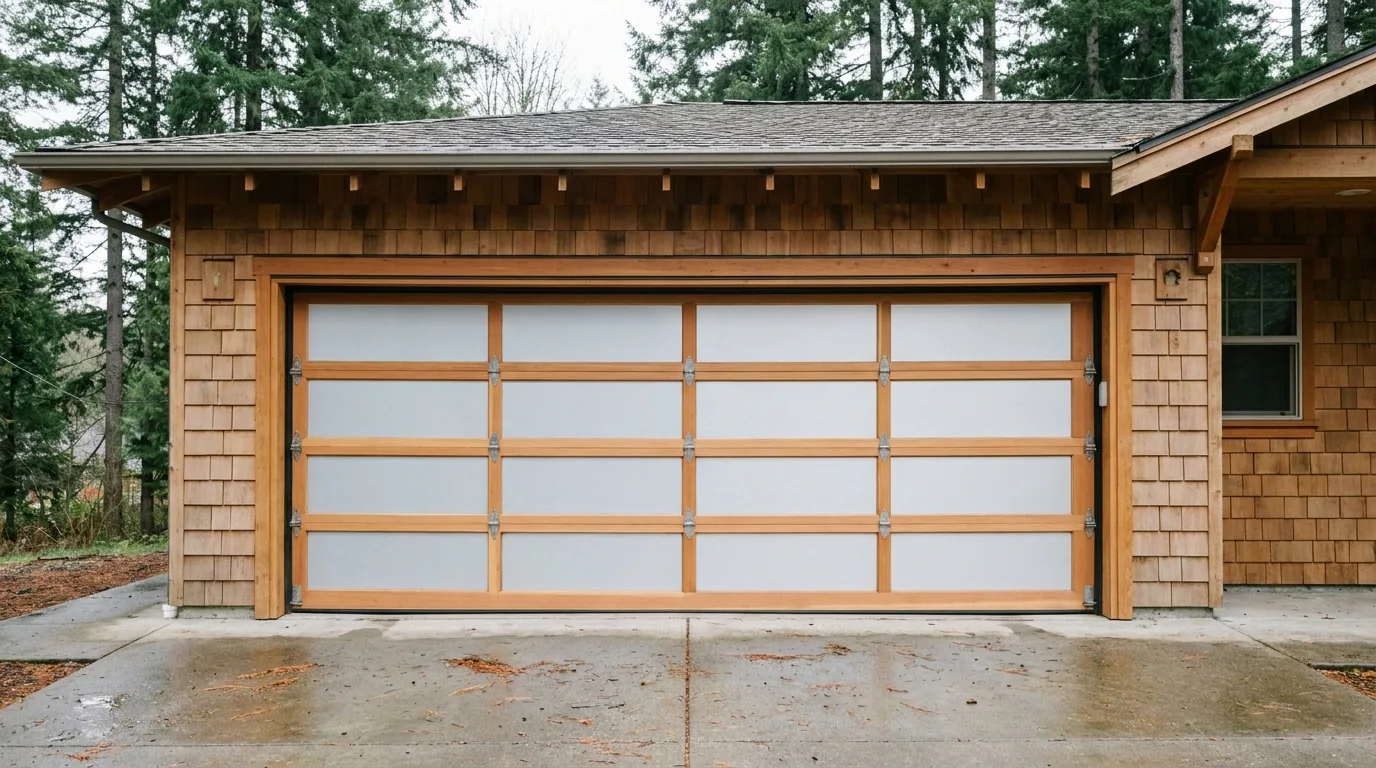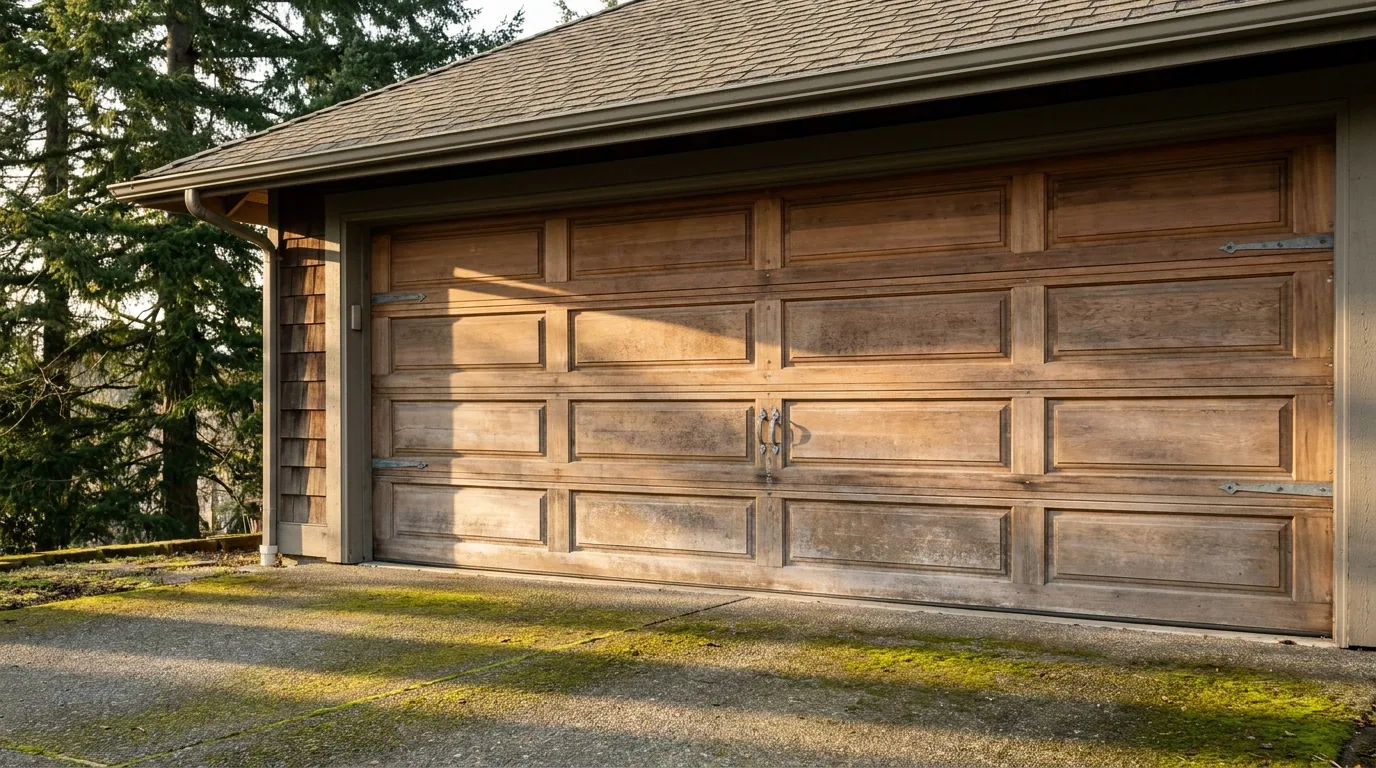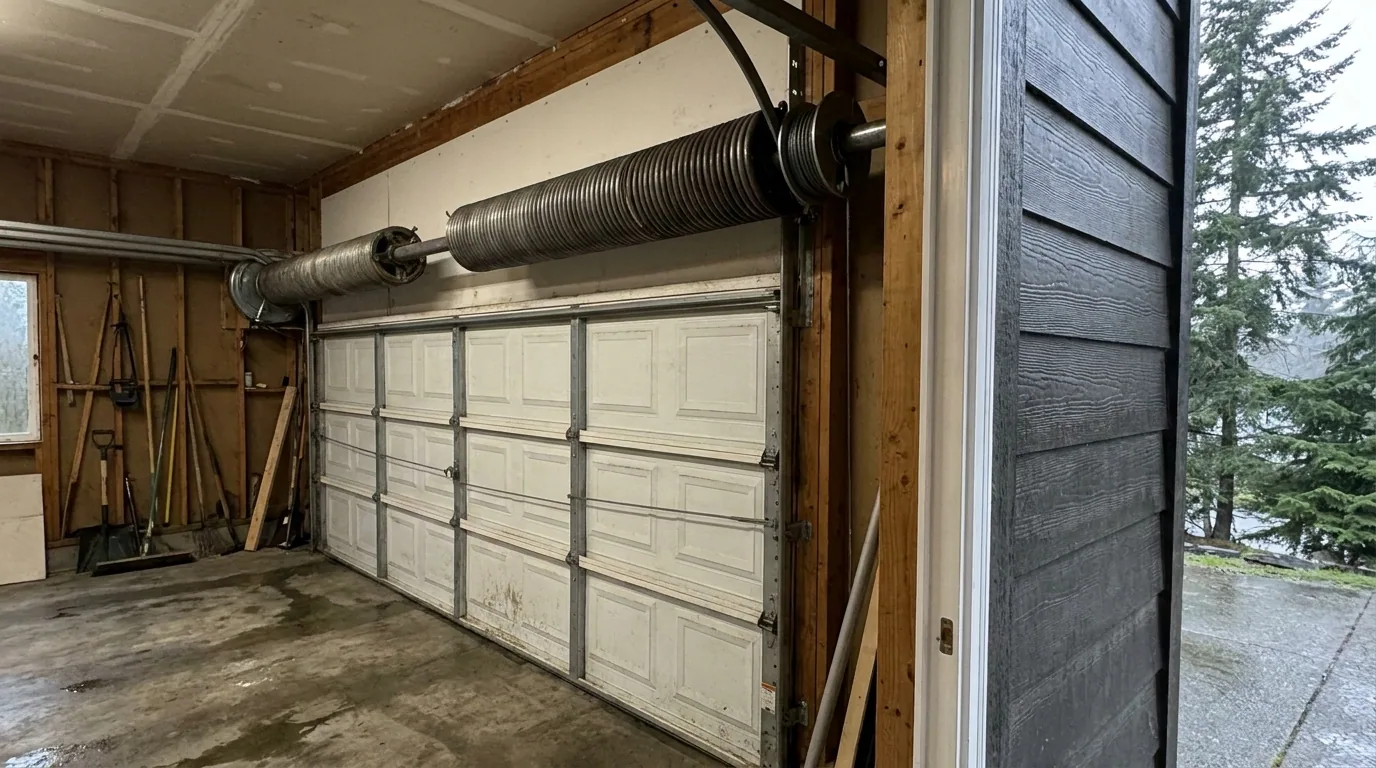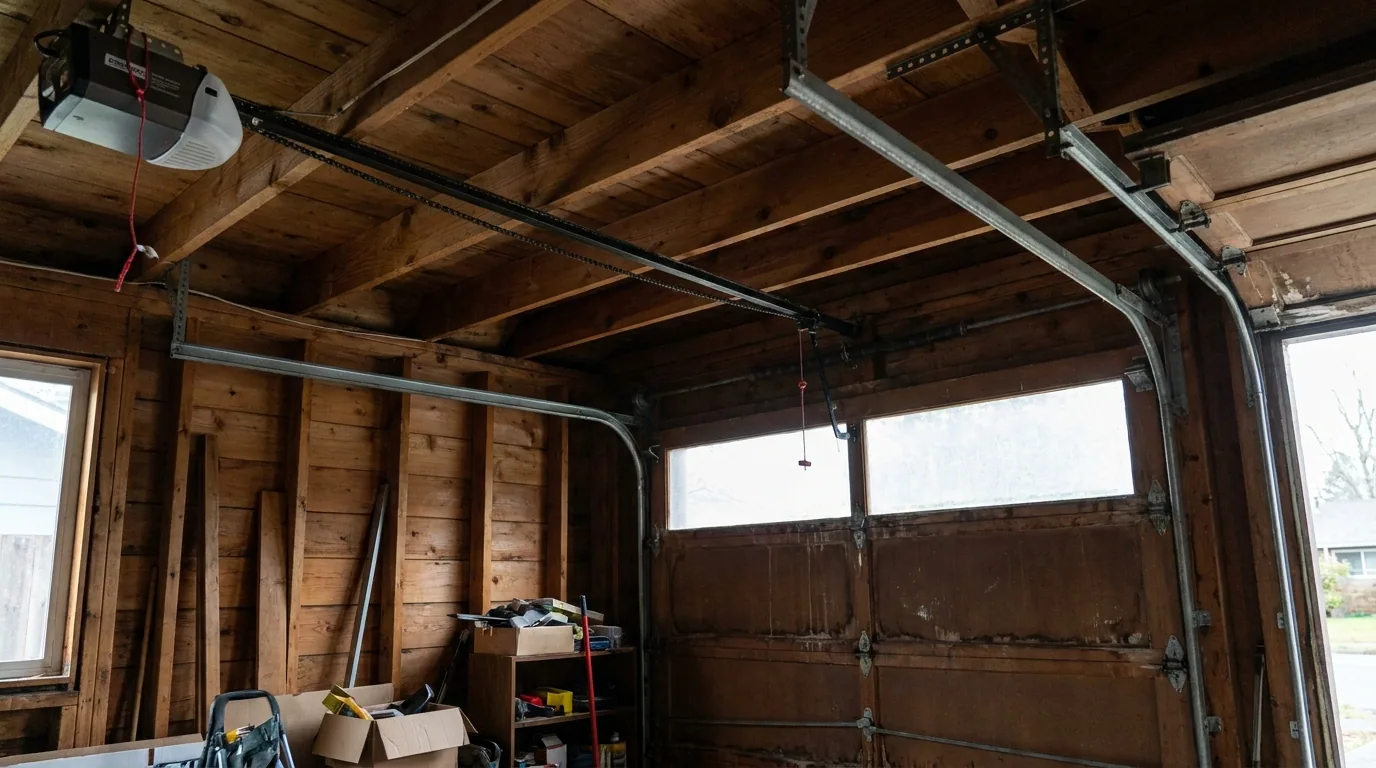
A timber garage door on an Edwardian building is a different machine from the steel sectional doors most repair advice is written for. It is built from boards and stiles that move with the weather, hung on hinges or a pivot, and set into an opening cut by hand a century ago. When it starts to stick, the first instinct is often to replace it. That is usually the wrong first move. An original door that has served a building this long is worth adjusting, and the reason it sticks is often something a technician can correct without touching the door's structure at all. This article covers what you can safely notice from outside the door with the garage empty, the most likely causes of a sticking timber door, and where the work belongs.
Start with when it sticks, not how much
"Sticking" describes several different behaviors, and the timing narrows the list. A door that sticks only in the morning after a foggy night is different from a door that has always dragged at one corner, and both are different from a door that suddenly catches partway through a cycle after years of running clean.
A door that binds more on damp mornings and frees up by afternoon often points to the timber itself. Wood absorbs moisture from the air and swells slightly across its width, and a door fitted with a close tolerance can bind against its frame or its stop when the boards take on water. That is a plausible explanation for a door that changes with the weather, but it is not the only one. A hinge that has lost its lubrication, a pivot that has worn, or a track or guide that has shifted can produce the same complaint, and the two are separated by a technician's inspection rather than by guesswork.
A door that sticks at one corner regardless of the weather is more likely a hardware or alignment problem. A hinge that has worked loose, a bent strap, or a guide that no longer runs true will pull the door out of square and make it drag. A door that suddenly catches after years of smooth running is a different matter again, and it deserves a careful look before anything is forced.
What you can safely check from outside the door
With the garage empty and the door closed, there are a few things you can observe without touching any of the moving hardware. None of them require you to lift the door, pull a release, or put your hands near a spring or cable.
- Look at the gap between the door and its frame. An even gap on both sides and along the top is a good sign. A gap that is wider at one corner suggests the door has dropped or the frame has moved.
- Watch the door through a full cycle from outside. Note where it catches, whether it catches on the way up, on the way down, or both, and whether the door sits crooked as it travels.
- Listen at the start of a cycle. A new scrape, a groan, or a single knock is worth describing to a technician, because each points in a different direction.
- Note whether the sticking changes with the weather. A door that binds on damp mornings and frees by afternoon is telling you something different from a door that binds every time.
What you should not do is force a sticking door. Pushing harder on a door that is binding puts load on hinges, guides, and panels that were not designed for it, and it can turn a small adjustment into a bent panel or a cracked stile.
The likely causes, and what separates them
A sticking timber door has several possible causes, and it is a mistake to pick one as "the" answer before the door has been inspected. The most common are these.
Seasonal swelling of the timber. Wood takes on moisture in damp air and gives it back in dry air. A door fitted tightly can bind when the boards swell. This is consistent with a door that sticks on foggy mornings and frees later. The test is whether the sticking tracks the weather over several weeks.
Worn or dry hinges and pivots. A hinge that has lost its lubrication or worn at the pin will drag, and the door will bind on the hinge side. This tends to be consistent regardless of the weather, and it often comes with a squeak or a groan at the start of a cycle.
A guide or track out of line. On a door that runs on guides, a guide that has shifted or a track that has been knocked out of true will pull the door off square and make it catch. This shows up as a door that sits crooked as it travels or that catches at the same point every cycle.
A door that has dropped on its hinges. Over decades, a heavy timber door can settle. A gap that is wider at one top corner and narrower at the opposite bottom corner is consistent with a door that has dropped, and it is corrected by adjusting the hinges rather than by replacing the door.
A technician separates these by inspecting the hinges, the guides, the frame, and the door's square, and by checking how the door behaves through a full cycle. That inspection is the step that decides whether the door needs an adjustment, a hardware replacement, or something more.
Why adjustment usually beats replacement on an Edwardian door
An original timber door on an Edwardian building was made for that opening. The frame, the stops, and the door itself have settled together over a century, and a new door means fitting a new door to an old opening, which is a different and often larger job than adjusting what is already there. Adjustment also preserves the door's appearance, which matters on a building where the garage front is part of the street elevation.
There are cases where replacement is the right answer: a door with rot through the stiles, a door that has cracked across a panel, or a door whose frame has moved enough that adjustment will not hold. Those are decisions for a technician who has inspected the door, not for a homeowner guessing from the driveway.
One thing to keep in mind on older buildings: in pre-1970 construction the garage opening often carries structural load, and track or header damage deserves a careful look before anyone drills into it. If the frame around the door has moved or cracked, that is worth flagging before any adjustment work begins.
Where the work belongs
Adjusting hinges, realigning guides, and correcting a dropped door are technician work. So is anything involving the springs, cables, or the opener drive train, which should never be handled by a homeowner. If your door is sticking, the safe course is to stop forcing it, note when and where it binds, and have it inspected. Same Day Garage Door Repair & Service works on residential and commercial doors across San Francisco, including the Mission District, Castro, Noe Valley, Pacific Heights, SoMa, Richmond District, Sunset District, Bernal Heights, Glen Park, Marina District, North Beach, Hayes Valley, Potrero Hill, and Excelsior District. The company is licensed and insured, and can be reached at (415) 992-9484 or SameDayGarageDoorOne@gmail.com. Weekend hours are Sat-Sun: 8:00 AM - 6:00 PM, weekday hours are Mon-Fri: 7:00 AM - 8:00 PM, and 24/7 emergency service is available.