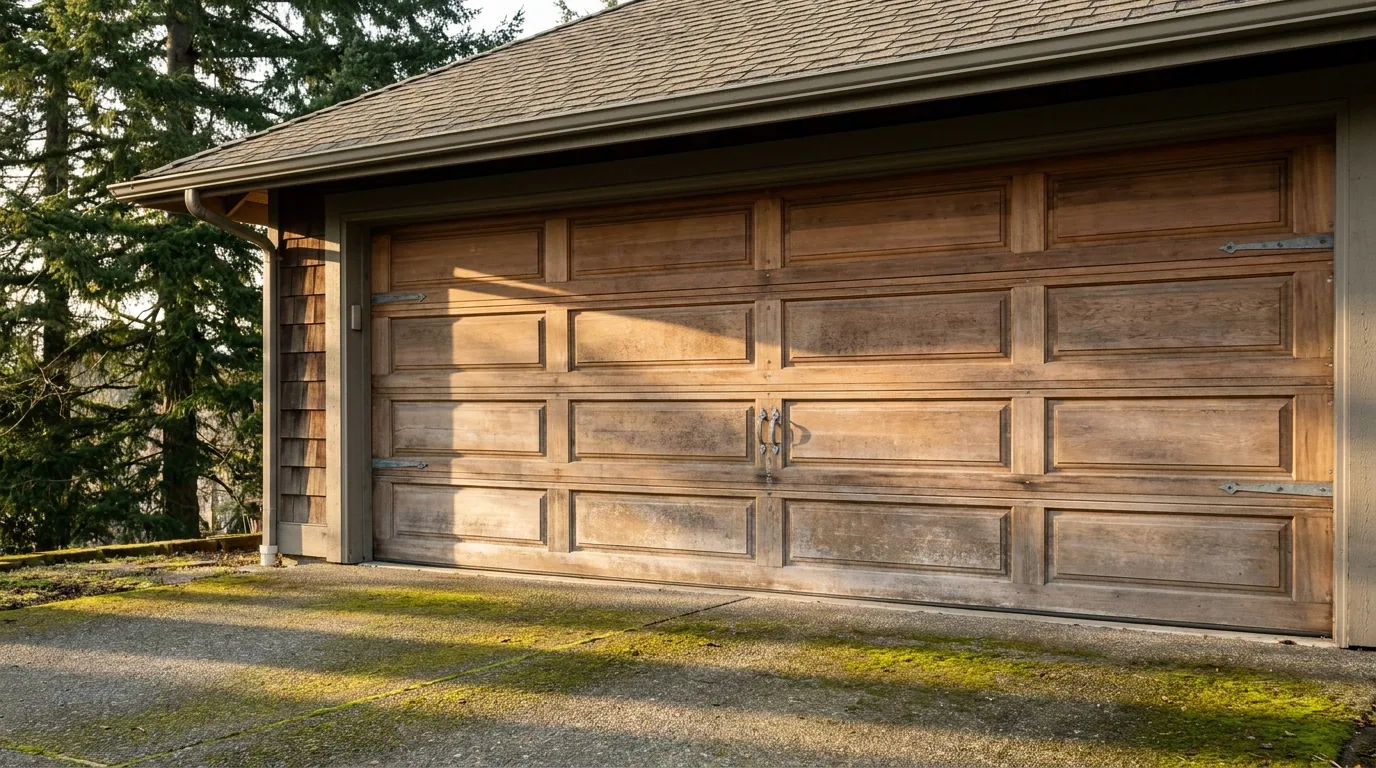
A door that reverses partway down, or refuses to start at all, behaves differently depending on where in the cycle the fault appears, and on a narrow side-setback garage the photo-eye is the part most often suspected first. That suspicion is sometimes right and sometimes wrong. A photo-eye is a safety device on the closing travel. It has a defined job: if the beam between the two units is interrupted while the door is coming down, the door reverses. It has no role in a door that will not start, opens a little then reverses, or stops short of the floor. On a tight side setback, where the two units sit close to a wall, a fence, or the door's own track, alignment is easy to disturb and easy to misread. This article covers what you can safely observe from outside the door with the garage empty, how to separate a photo-eye fault from a travel-limit or force problem, and which work belongs to a technician. Same Day Garage Door Repair & Service works on residential and commercial doors throughout San Francisco, including the Sunset District, Richmond District, Marina District, and Bernal Heights.
Start with exactly when the door reverses
Stand outside the door with the garage empty and watch a full close from the open position. Note three things: whether the door reverses immediately after it starts down, whether it travels most of the way and then reverses before reaching the floor, and whether the behavior is the same every cycle or intermittent.
That timing separates two different systems. A reversal in the first foot or so of travel, or a door that will not begin closing at all, points toward the photo-eye circuit. A reversal close to the floor, after the door has traveled most of its run, is a travel-limit or force-setting problem, and the photo-eye is not involved. A door that reverses at random heights on different cycles is a third pattern and usually needs a technician to sort out.
What the photo-eye actually does, and what disturbs it
The photo-eye is a pair of units mounted at the bottom of the opening, one on each side, sending an invisible beam across the doorway. When the beam is broken during the closing travel, the door reverses. That is the whole of its function.
On a narrow side setback, the units are mounted close to whatever sits alongside the opening, and several ordinary conditions can interrupt the beam or the signal:
- Misalignment. One unit has been knocked, or has shifted on its bracket, so the beam no longer lands on the receiver. This is common where the door is squeezed between a wall and a fence and something brushes the unit in passing.
- Obstruction. A stored item, a broom, a recycling bin, or a bag left in the path breaks the beam. On a tight setback there is often nowhere to put things except the edge of the opening.
- Dirty lenses. Dust, cobwebs, or grit on the lens of either unit weakens the beam. In a side setback that collects leaves and grit, this builds up faster than owners expect.
- Sunlight or a reflective surface. Low sun angling into the opening, or a shiny object near the receiver, can interfere with the beam on some units.
- Wiring or the unit itself. A damaged wire run, a loose connection at the opener head, or a failed unit will produce the same symptom as misalignment.
Cleaning the lenses and clearing the path are things you can do safely. Re-aiming a unit, tracing its wiring, or replacing it belongs to a technician, because the units are set to a specific height and angle and a well-meant adjustment can leave the door reversing on every cycle.
How to tell a photo-eye fault from a travel-limit fault
The test that separates them is the point of reversal, not the sound and not the frequency. Watch a full close and note where the door turns around.
If the door reverses within the first foot of downward travel, or will not begin closing, the photo-eye circuit is the leading suspect, and the checks above apply. If the door travels most of the way down and then reverses just above the floor, the opener's travel limit or force setting is the more likely cause, and the photo-eye is not part of that picture. If the door closes fully but stops short of the floor and holds there, that is a limit setting as well.
A third pattern is worth naming because it is often mistaken for a photo-eye problem: a door that closes, meets resistance, and reverses back up. That is the opener's force setting responding to load, and it can be triggered by a stiff roller, a binding track, or a door that has become harder to move. The technician checks the door's travel and the opener's settings together, because adjusting one without the other tends to move the fault rather than fix it.
What a technician checks that you should not
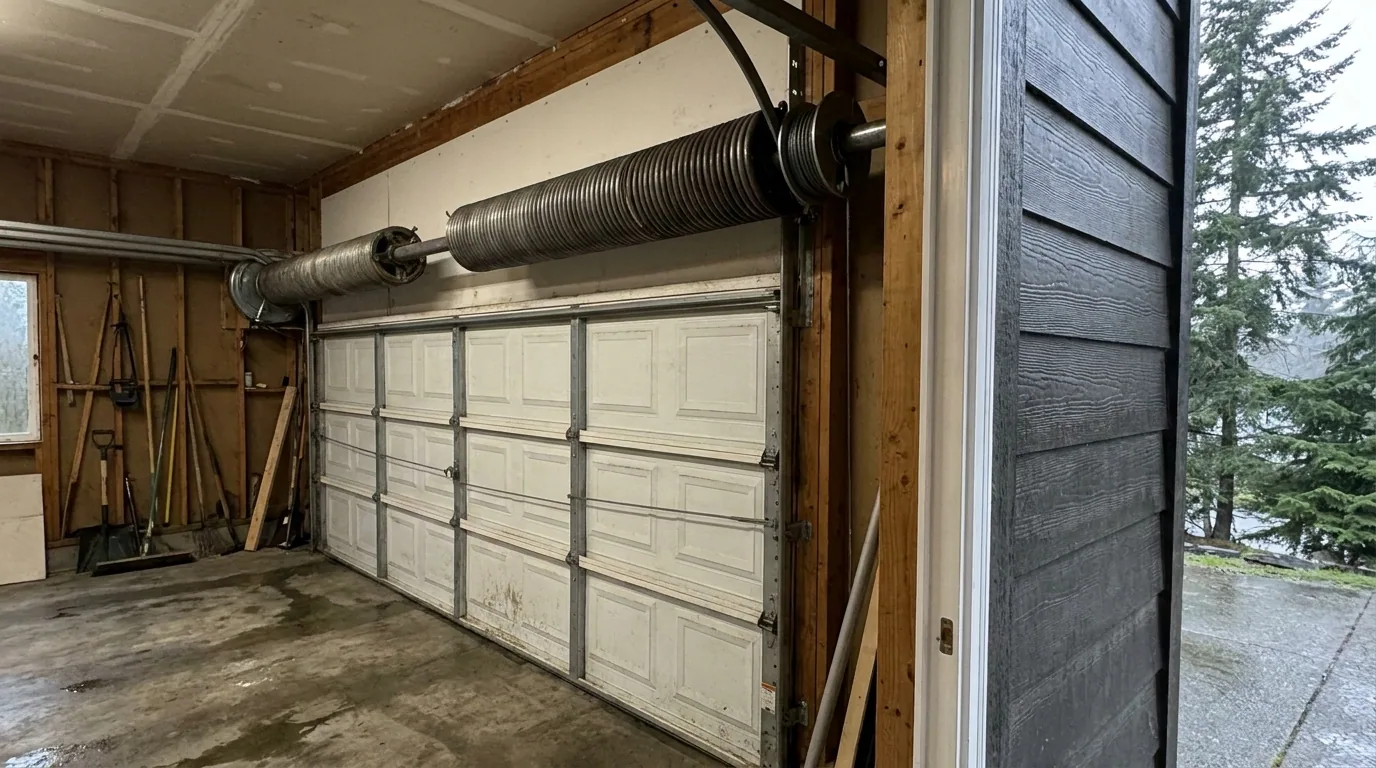
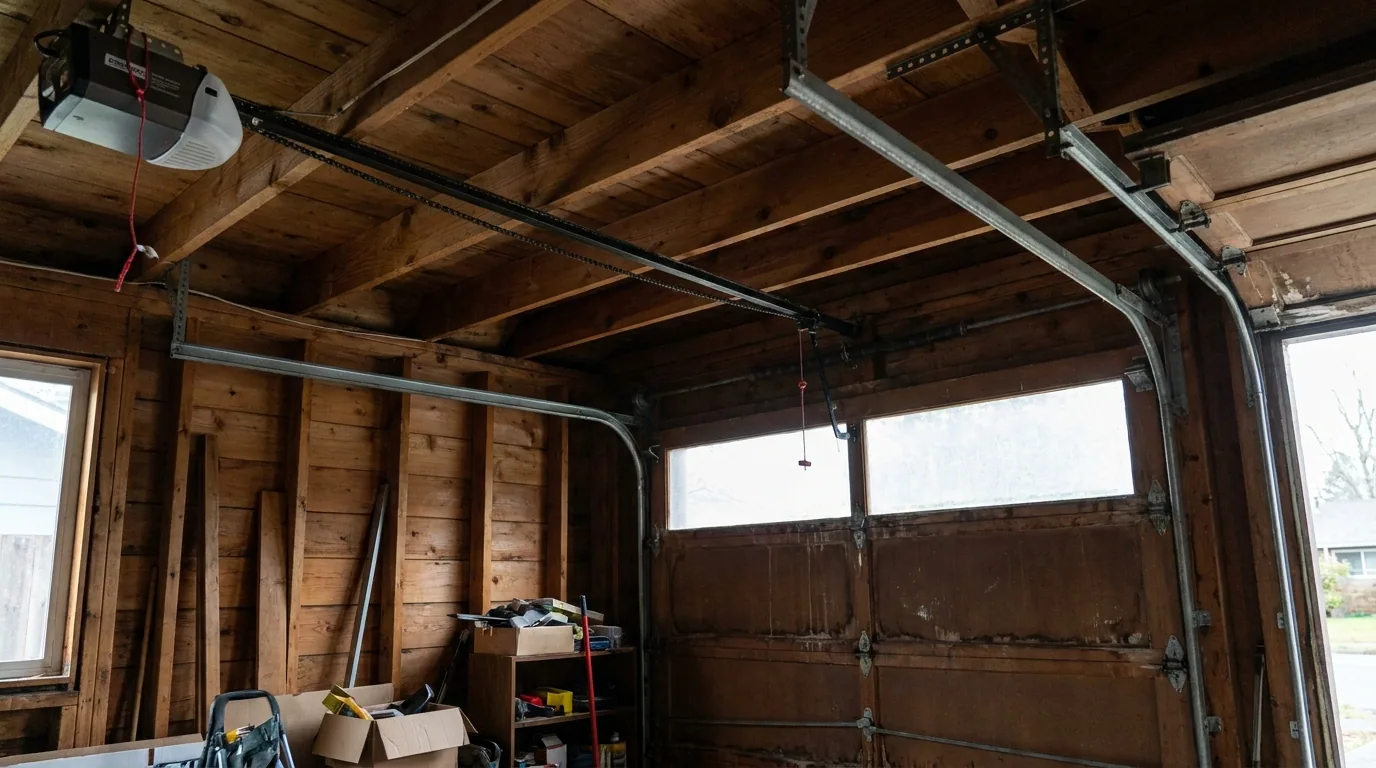
The parts of this system that carry risk are the ones wired to the opener and the ones under spring tension. A technician will check the photo-eye alignment with the units powered, trace the low-voltage wiring back to the opener head, confirm the units are set at the correct height above the floor, and verify that the opener's reverse responds correctly when the beam is broken. The technician also inspects the springs and cables, checks the door's travel and balance, and confirms the opener's force and limit settings match the door.
None of that is homeowner work. The springs and cables are under tension, and the opener's drive train and wiring are not places to experiment. If the door feels heavier than usual in normal use, or a new noise appears at the start of a cycle, that is a reason to have the door looked at rather than a reason to start adjusting.
Living with a narrow side setback
A tight side setback is a permanent condition of the building, not a fault, but it does shape how the photo-eye behaves over time. Keep the floor at the opening clear so nothing rests in the beam path, and wipe the lenses when you notice the door reversing on close. If the door reverses again after the path is clear and the lenses are clean, stop cycling it and have the system checked. Same Day Garage Door Repair & Service is licensed and insured and can be reached at (415) 992-9484 or SameDayGarageDoorOne@gmail.com; the address is 328 Bocana St, San Francisco, CA 94110, with weekday hours of 7:00 AM to 8:00 PM, weekend hours of 8:00 AM to 6:00 PM, and 24/7 emergency service.