A garage door is mostly steel, and in San Francisco's western neighborhoods that steel lives in salt air. The Sunset and Richmond districts sit close enough to the ocean that fog carries salt inland and leaves it on every exposed surface it touches. That salt does not stop at the door's paint. It works into the track, the hinges, the rollers, and the fasteners, and it does so gradually enough that most homeowners notice the result — a door that drags, squeals, or runs unevenly — long before they notice the cause. This article covers what rust actually does to a door's hardware, what you can safely observe from outside the door with the garage empty, and what slows the process down. The work itself belongs to a technician.
What salt fog does to a garage door
Salt is corrosive because it holds moisture against metal. In a dry climate, a scratch in a painted track might sit harmless for years. In fog country, that same scratch collects a film of damp salt and stays wet far longer. The steel beneath the paint begins to oxidize, the paint lifts from underneath, and the rust spreads along the track rather than staying where it started.
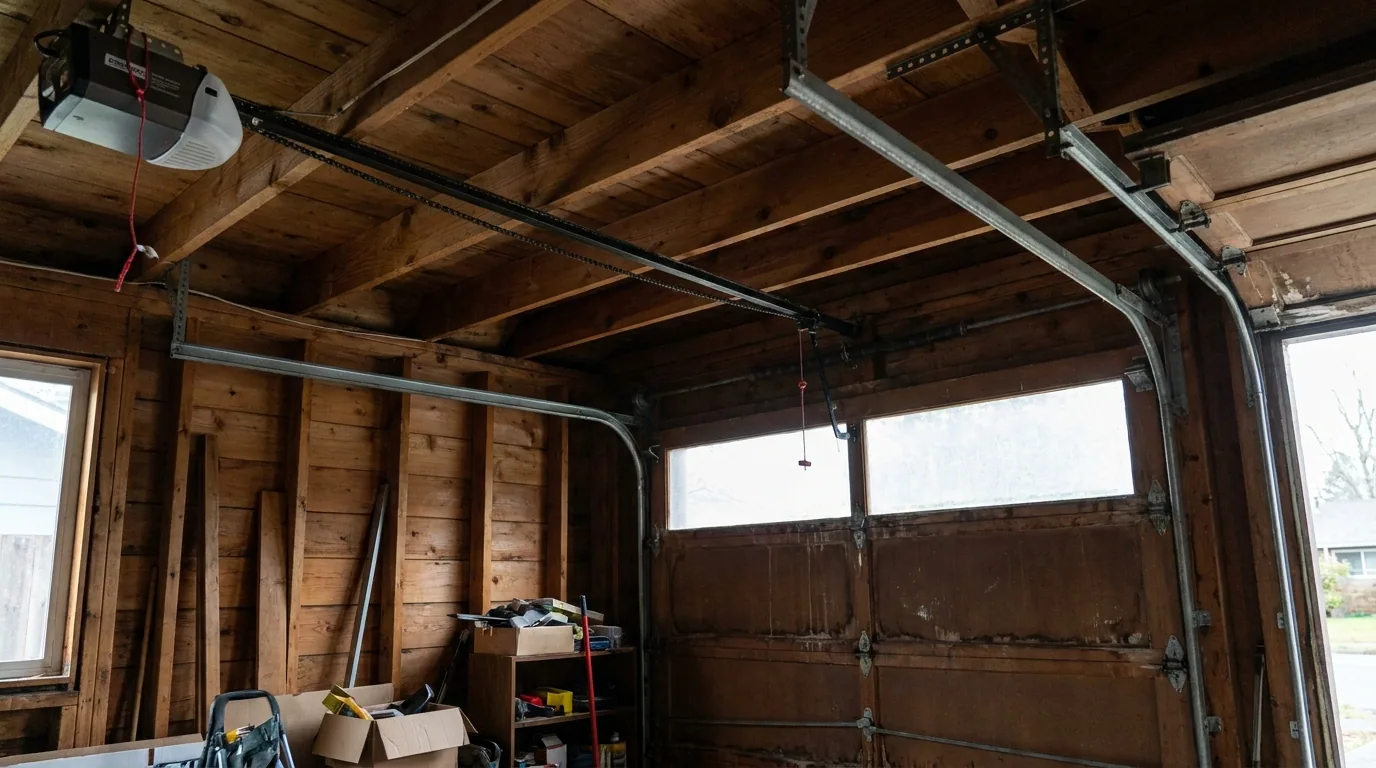
The parts most exposed are the ones that move. A track's inner surface is where the rollers ride, and it is also where moisture collects and where paint wears away first. Hinges have pivot points that are difficult to keep coated, and every cycle works grit into those joints. Rollers, whether steel or nylon, run in the same damp channel. Fasteners holding the track to the jamb are often the first thing to show rust, because their heads sit proud of the surface and collect water.
None of this happens overnight. It is a slow accumulation across seasons, which is why the door often feels wrong before anything looks obviously broken.
What you can notice from outside the door
With the garage empty, watch and listen to the door through a full cycle. You are not inspecting the hardware — that is technician work — but you can register how the door behaves.
- The door runs unevenly. One side lags, or the door shudders at a particular point in the travel. A rusted or contaminated track and a worn roller can both produce this, and so can a track that has been knocked out of line.
- A new squeal or scrape during travel. This can come from a dry hinge, a rusted roller, or a track surface that has lost its coating. The sound alone will not tell you which.
- The door feels heavier in normal use. If you operate the door by its normal controls and it seems to labor more than it used to, that is worth reporting, though it has several possible causes.
- Visible rust staining on the track or at the hinges. Staining at the surface is something you can see from the floor without touching anything.
- The door sits crooked or shows a gap along the top. Either can point to a track or hardware problem, but the cause is not certain from the outside.
What separates these possibilities is a technician's inspection of the track alignment, the rollers, the hinges, and the springs and cables. Do not clean, lubricate, or adjust the track yourself, and do not touch the springs, cables, or opener drive train.
Why the coast side is harder on steel
The Sunset and Richmond districts sit in the path of marine air. Fog is not just water vapor — it carries dissolved salt from the ocean surface, and when it condenses on a cold steel track it leaves that salt behind as the moisture evaporates. The cycle repeats, and the concentration on the metal builds.
This is why a door in an inland neighborhood and a door a few blocks from the ocean can be the same age and the same model and still be in very different condition. It is also why maintenance intervals that work elsewhere may be too long on the coast. That is a general point about exposure, not a claim about any particular address.
What slows it down
You cannot keep salt air off a door that faces it, but you can slow what happens after it lands.
- Keep the paint intact. A painted track and painted door sections resist rust only as long as the coating is unbroken. Touch up chips and scratches when you notice them, using a product appropriate to the surface. This is homeowner work and does not involve the moving parts.
- Keep the garage floor and door area dry where you can. Standing water and damp debris against the bottom of the door accelerate corrosion at the most vulnerable point.
- Have the hardware serviced on a schedule. A tune-up and safety inspection lets a technician clean and lubricate the moving parts, check the track for alignment, and identify rust before it becomes a seized roller or a binding hinge. Lubrication of hinges, rollers, and tracks is routine technician work.
- Replace worn components rather than waiting. A rusted roller that has stopped turning will wear the track it rides in. Addressing it early keeps the problem from spreading to the track itself.
If a track is already pitted through its coating, or a hinge has seized, cleaning will not restore it. Panel and hardware replacement is the practical answer at that point, and a technician can tell you which parts have reached it.
When to call
Call for service when the door runs unevenly, makes a new noise, or shows rust that has spread beyond a surface stain. Same Day Garage Door Repair & Service works throughout the Sunset District, Richmond District, and the rest of San Francisco, and the company is licensed and insured. Reach them at (415) 992-9484 or SameDayGarageDoorOne@gmail.com. The garage door springs, cables, and opener drive train are technician work — do not attempt to adjust or inspect them yourself.