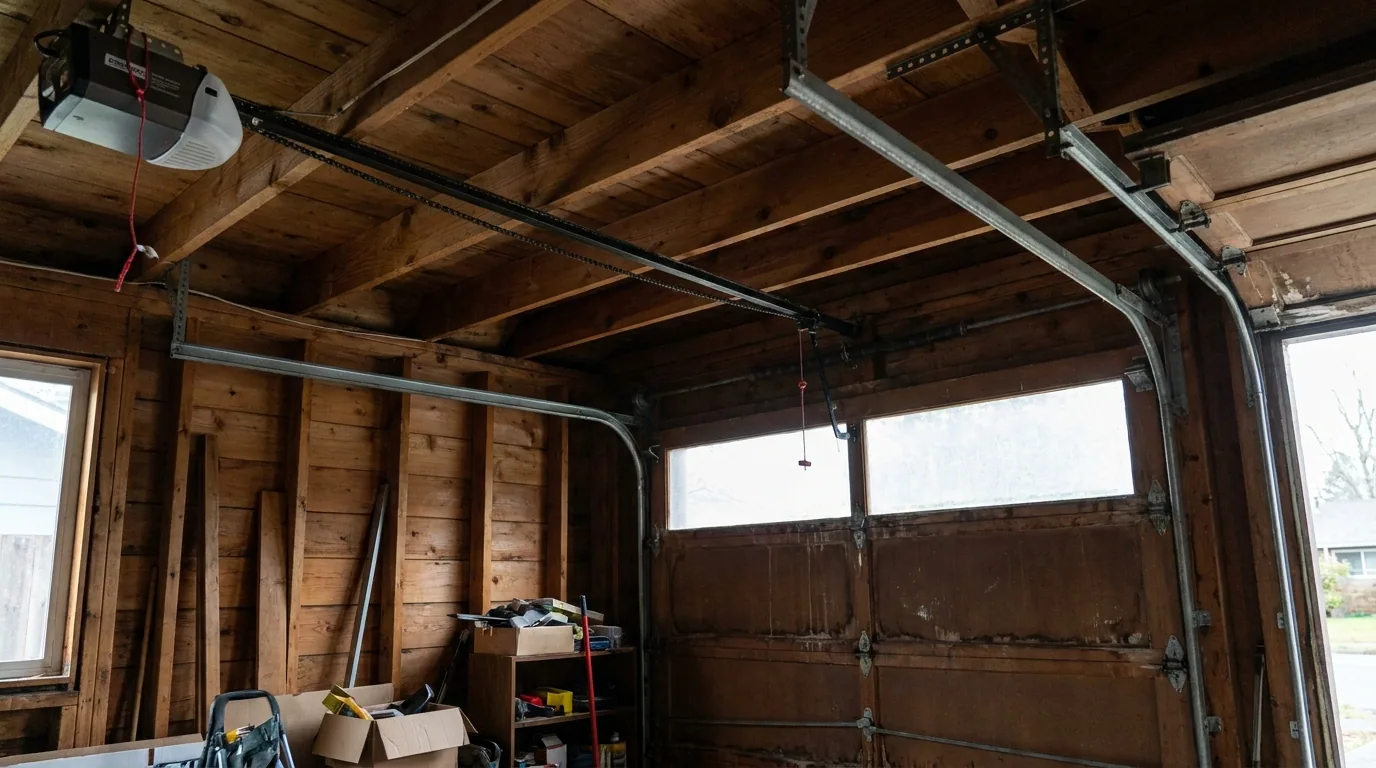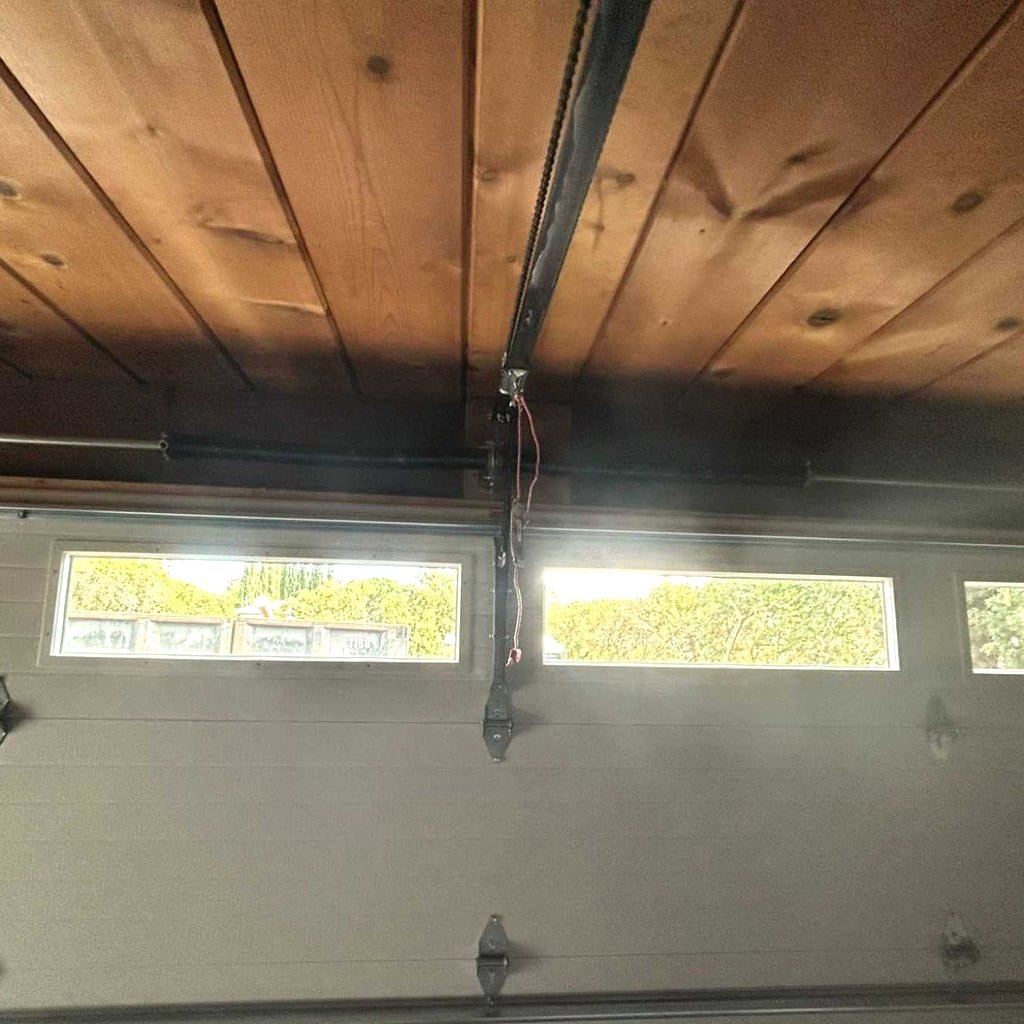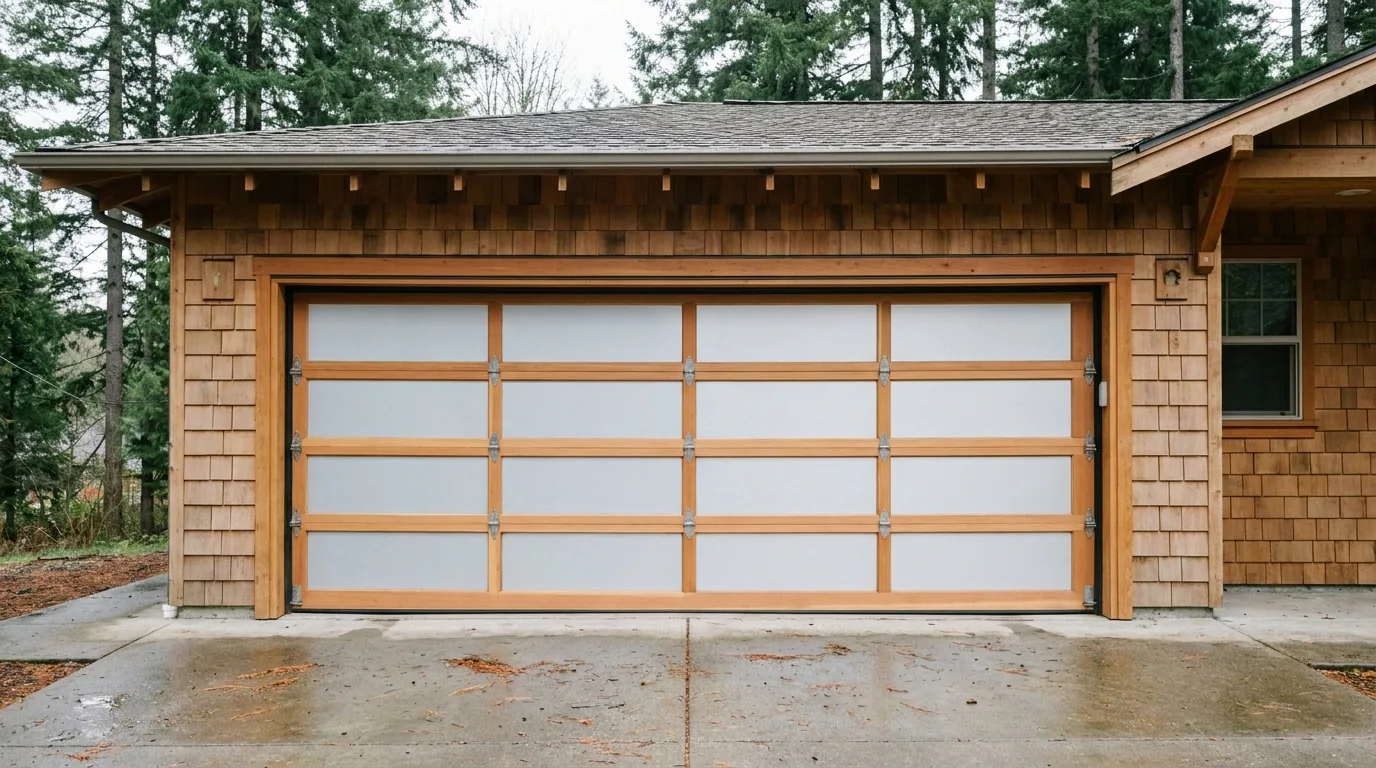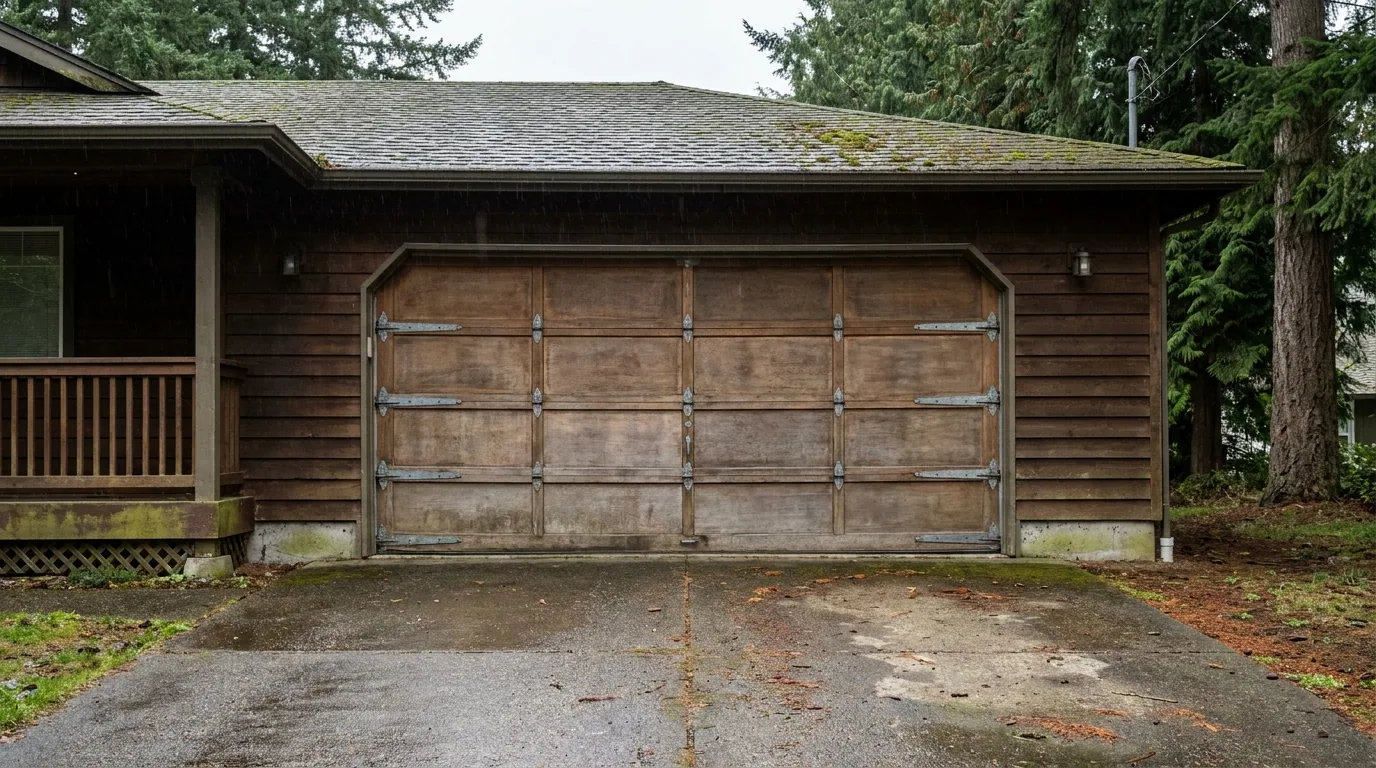
A garage door cable is a braided steel rope under real tension, wound on a drum at each end of the torsion shaft or running alongside the springs on a tilt-up door. Its job is to keep the door square in its tracks and to connect the door's weight to the counterbalance. When strands start to break and the cable frays, the door is still working, which is exactly why so many homeowners wait. The problem is that a frayed cable does not heal, and the cost of ignoring one is paid in bent panels, torn tracks, a door that comes down crooked, and sometimes a car or a person underneath it. This article covers what you can safely notice from outside the door with the garage empty, why the failure tends to compound, and where the work belongs.
What a frayed cable actually does to the door
A cable carries load along its whole length. Once strands break, the remaining strands carry more than their share, and the cable begins to stretch unevenly or to bind on its drum. That is when the door stops lifting evenly. One side rises before the other, the panels rack slightly in the opening, and the rollers start to bind against the track. A door that has been running this way for a few weeks often shows the damage in the panels themselves: a gap opens along the top, or the door sits visibly crooked when closed.
The compounding is the expensive part. A cable is a small component compared with the panels, tracks, and opener it drags out of alignment when it fails. A door that comes down on one side can bend a panel, pull a track out of the wall, or strip the opener's carriage. That is the real cost of waiting: not the cable, but everything the cable takes with it.
What you can safely notice from outside the door
With the garage empty, run the door through one full cycle and watch from the floor. You are looking for behavior, not parts.
- The door sits crooked when closed. One corner is higher than the other, or there is a wedge-shaped gap along the floor. A snapped cable will hang a door at an angle, but a broken spring or a bent track can produce the same picture, so the cause is not settled until a technician checks the springs, cables, and track.
- A gap opens along the top of the door as it rises, or the panels no longer line up with each other.
- The door feels heavier in normal use — you notice it when you operate the opener or when you use the door as you always do. Do not lift the door by hand to test it. That is a technician's job, and a door with a compromised cable is not a safe thing to put your hands under.
- A new noise at the start of the cycle — a snap, a twang, or a scraping sound that was not there before.
What you should not do is look closely at the cable itself. A frayed cable under tension can fail while you are near it, and the springs and drums at either end are under load that can injure seriously. The technician inspects the cables and springs; you describe what the door is doing.
Why the cable and the spring are usually discussed together
Cables and springs work as a system. The springs carry the door's weight; the cables keep the door square and connect it to that counterbalance. When a spring breaks, the cable on that side suddenly carries load it was never meant to hold, and it can snap or jump its drum. When a cable frays and stretches, the spring on that side is no longer doing its share of the work, and the door runs unevenly. That is why a technician who finds a frayed cable will also check the springs, the drums, and the track alignment before signing off on the repair. Replacing a cable on a door with a tired spring just moves the failure to the next component.
What the technician checks that you cannot
On arrival, the technician will inspect the cables along their full length for broken strands, check how each cable is seated on its drum, and inspect the springs, the rollers, the hinges, and the track. The door will be cycled and its balance checked with the proper procedure, and the opener's force and travel settings will be reviewed. If the cable failure has already bent a panel or pulled a track, that gets identified in the same visit so the repair is planned as a whole rather than piece by piece.
If your door is sitting crooked, making a new noise, or feeling heavier than it used to, stop running it and call (415) 992-9484. Same Day Garage Door Repair & Service is licensed and insured and serves the Mission District, Castro, Noe Valley, Pacific Heights, SoMa, Richmond District, Sunset District, Bernal Heights, Glen Park, Marina District, North Beach, Hayes Valley, Potrero Hill, and Excelsior District, with 24/7 emergency service. Weekday hours are 7:00 AM to 8:00 PM, weekend hours 8:00 AM to 6:00 PM, and the email is SameDayGarageDoorOne@gmail.com. The office is at 328 Bocana St, San Francisco, CA 94110.
The bottom line
A frayed cable is not a cosmetic issue and it is not something to monitor for a few months. It is a load-bearing part that is already failing, and the door it holds is heavy. The safe move is to stop cycling the door, keep clear of the springs and cables, and have a technician inspect the whole system — cables, springs, drums, track, and opener — so the repair addresses the cause and not just the symptom.