A garage opening on an older San Francisco building is usually tighter than the door a homeowner wants to put in it. The opening may be low, the alley behind it narrow, the ceiling above it shallow, and the door itself a single-panel tilt-up that swings out and up rather than sliding back along a track. Fitting a modern sectional door into that space is possible far more often than people expect, but it is a measurement problem before it is a product problem. This article covers what actually constrains a door in an old city garage, what a technician measures before anything is ordered, and which conditions call for a careful look before anyone drills into the opening.
What low clearance actually means
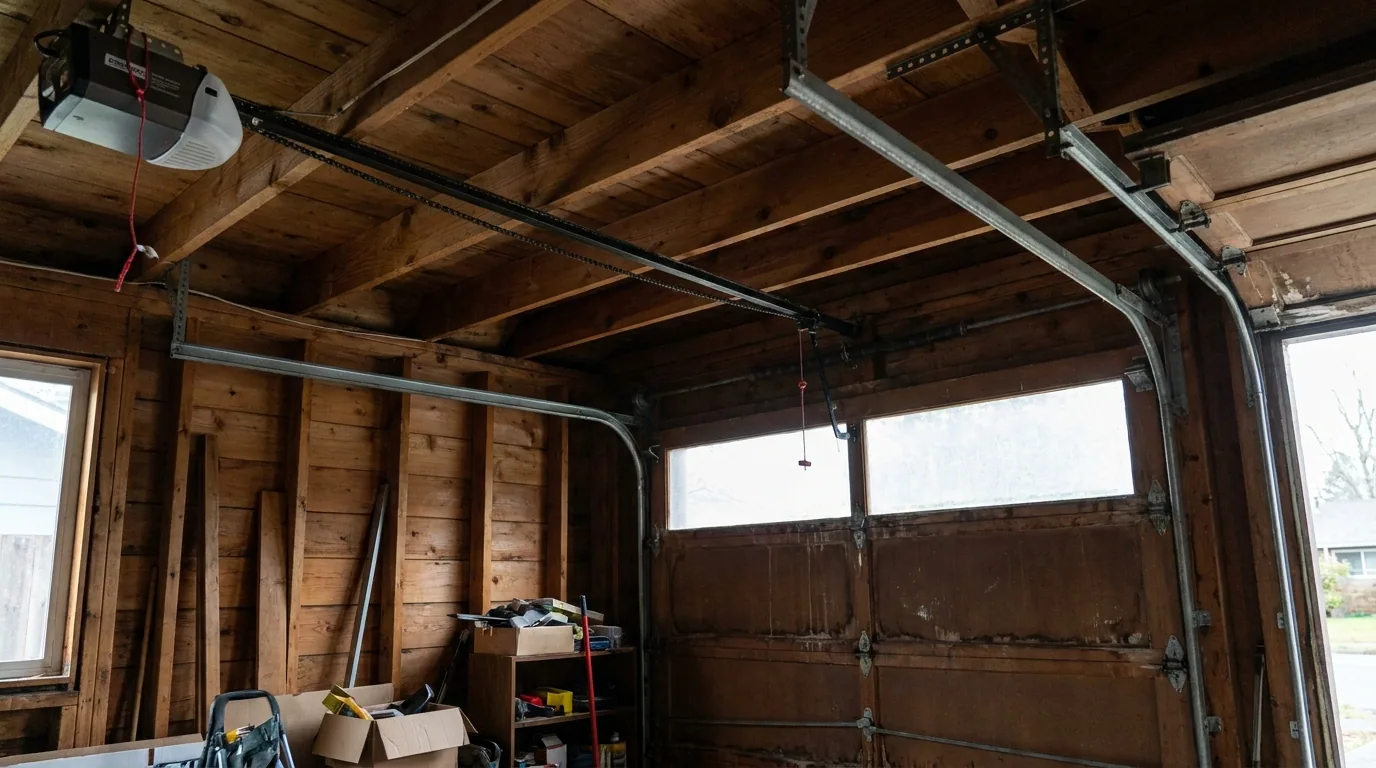
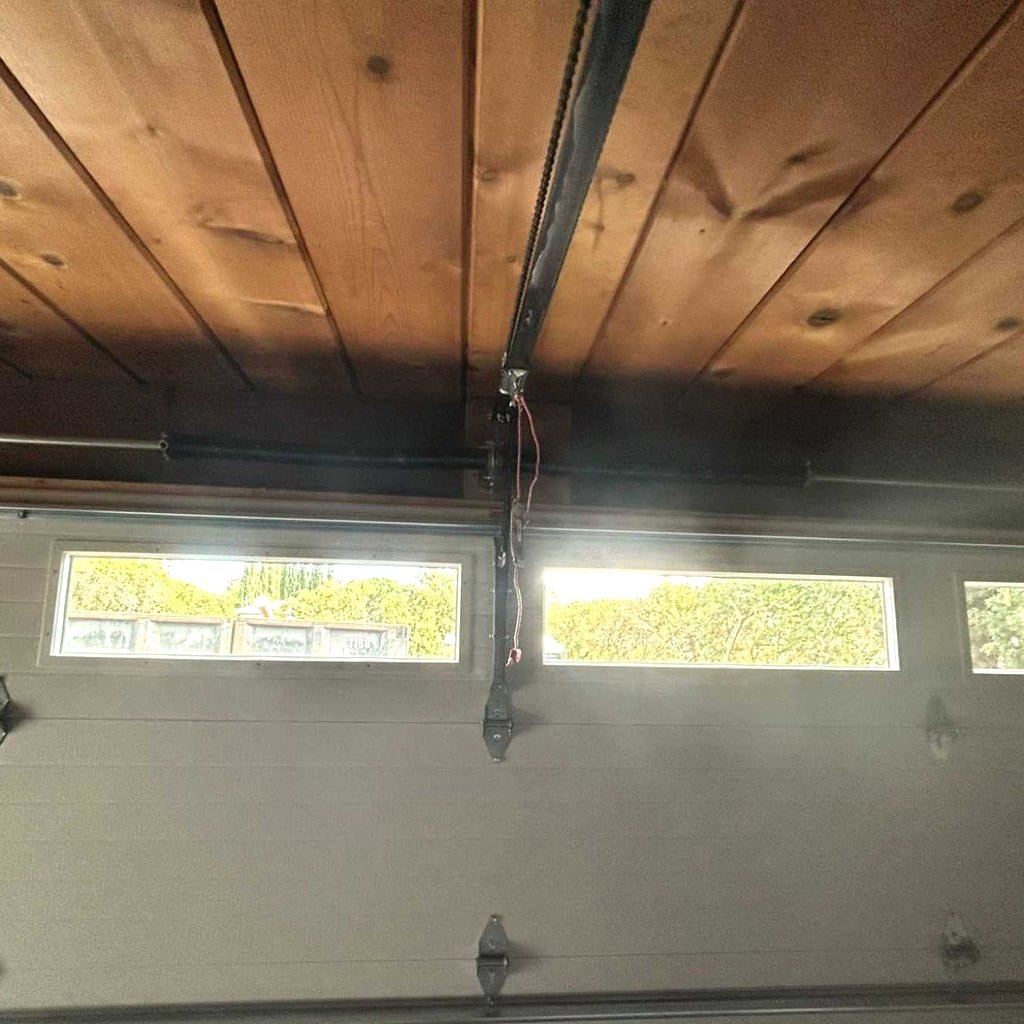
A sectional door needs room to travel. As it opens, the panels turn from vertical to horizontal and then run back along tracks under the ceiling. That path requires space above the door and behind it, and the amount required depends on the door's height and on how the track is laid out. A tilt-up door needs almost none of that overhead room, which is exactly why so many older garages were built with one.
Low headroom is not automatically a dead end. Track configurations exist that let a sectional door turn more tightly than a standard radius would allow, and a technician can tell you which of them your opening can take. What matters is that the measurement is taken before a door is ordered, not after it arrives. The number to establish is the distance from the top of the opening to the nearest obstruction above it, along with the depth of the garage behind the door and any pipes, beams, or ductwork in that space. A shallow garage with a low header and a water heater directly behind the door is a different job from a shallow garage that is otherwise empty.
The alley, the approach, and the swing
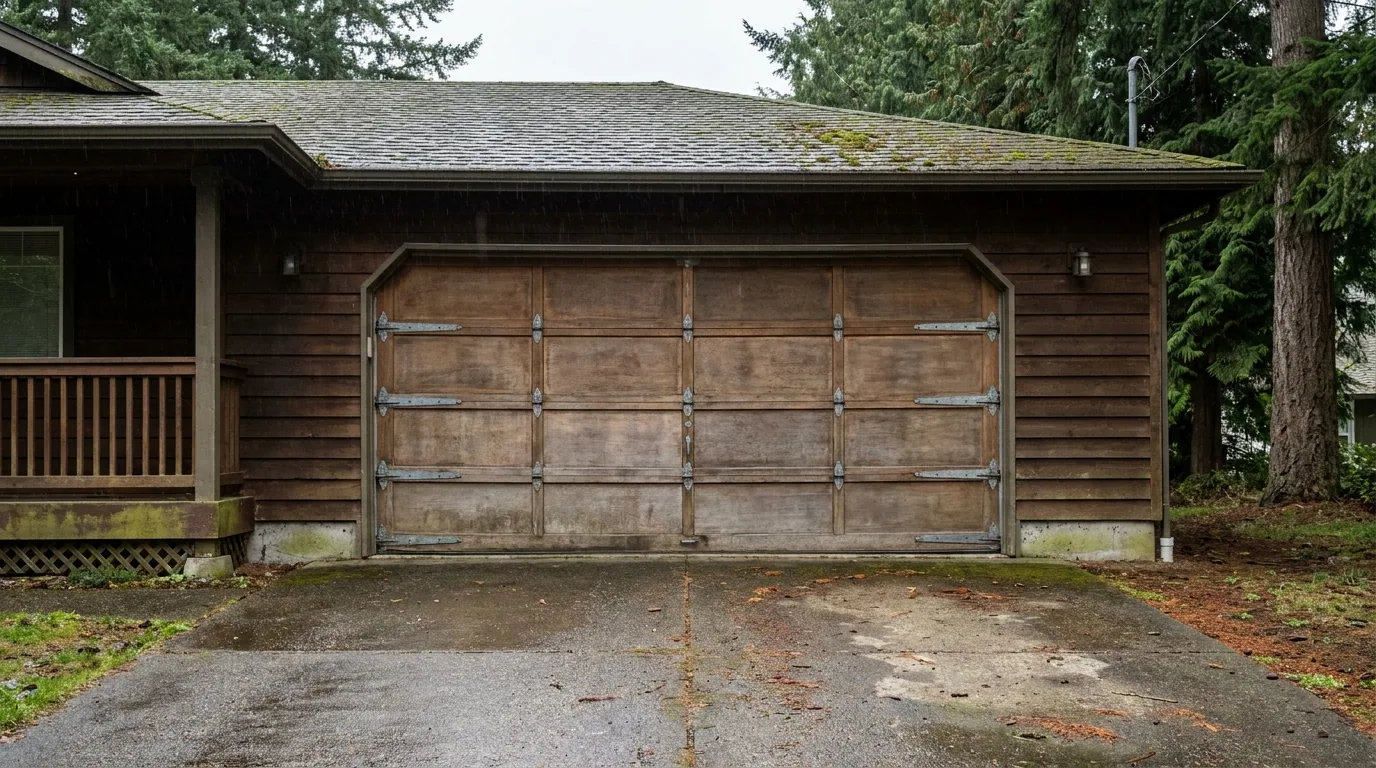
A door has to work with the space in front of it as well as behind it. A tilt-up panel swings outward as it opens, which is fine when the apron in front of the garage is deep and awkward when the garage sits at the end of a narrow alley with a gate or a neighbor's wall close by. A sectional door moves inward instead, so the question shifts to what is behind it.
Steep driveways add a second constraint. A door that closes onto a sloped apron has to meet it evenly across the width, and the bottom seal has to sit against the floor rather than hovering at one corner. If the apron falls away sharply, the door's closed position and the travel limits have to be set for that geometry. None of this is unusual in an older neighborhood, but it does mean the installation is not a straight swap, and the technician should see the approach, not just the opening.
Why the opening itself deserves a careful look
In buildings put up before 1970, the garage opening often carries structural load. The header above the door and the framing around it may be doing work that a modern opening would hand off to a steel beam. That matters because installing a new door usually means fastening track brackets and a torsion assembly to that framing, and drilling into a member that is carrying load without understanding it is how small jobs turn into structural ones.
This is not a reason to avoid the project. It is a reason to have the opening looked at before the work starts. Signs worth noting from outside the door with the garage empty include a header that has visibly sagged, cracks running through the masonry or stucco around the opening, and a door that no longer sits square in its frame. A technician can assess the opening and tell you whether the installation can proceed as planned or whether a structural question needs answering first.
What the technician measures, and why
A site visit for a replacement door is mostly measurement and observation. The technician records the width and height of the opening, the headroom above it, the depth of the garage, and the position of anything that would interfere with the door's travel. On the door itself, the technician inspects the springs, cables, rollers, and hinges, and checks the track for alignment and for the condition of its fasteners. In an older garage, the track may be original to a door that is long gone, mounted to framing that has moved since.
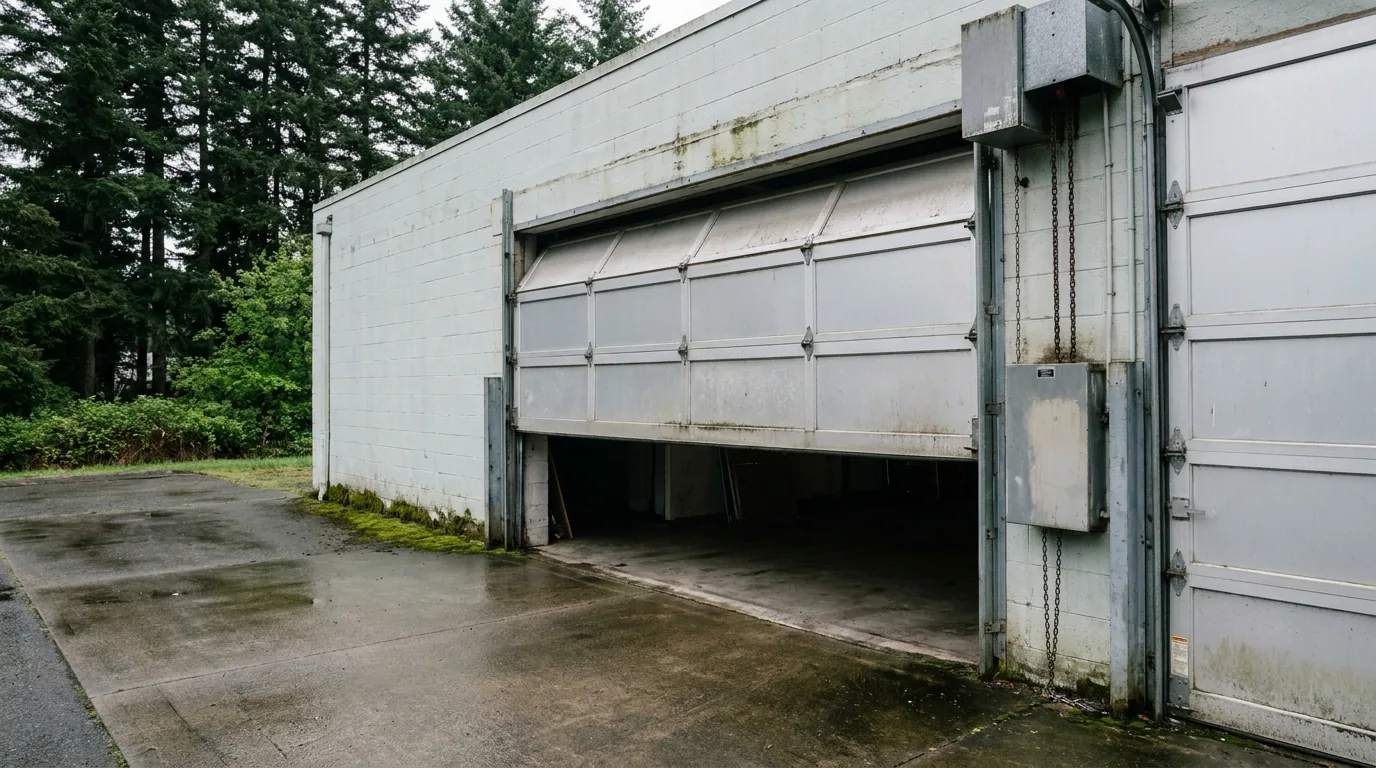
That inspection is also where corrosion shows up. Exposed steel near the coast weathers faster than the same steel inland, and in the Sunset, Richmond, and Marina districts the salt air and fog take a toll on tracks, hinges, and fasteners over time. A door that is being replaced anyway is a good moment to find out whether the hardware around it is sound enough to carry the new installation.
Where the homeowner's part ends
Everything above the floor and behind the door belongs to a technician: springs, cables, the torsion assembly, and the opener's drive train. A homeowner can usefully note what the door does in normal use, such as whether it feels heavier than it used to, whether it sits crooked in the opening, whether there is a gap along the top when closed, or whether a new noise has appeared at the start of a cycle. Those observations help narrow the diagnosis. They are not a substitute for the technician's inspection, and they should never involve reaching for the hardware.
If you are working out whether a modern door will fit an old garage in the Mission District, Noe Valley, Bernal Heights, or anywhere else in San Francisco, the answer starts with measurements taken on site. Same Day Garage Door Repair & Service works on residential and commercial doors across the city and can assess the opening, the approach, and the framing before anything is ordered. Call (415) 992-9484 or email SameDayGarageDoorOne@gmail.com to arrange a visit. The company is licensed and insured, and the address is 328 Bocana St, San Francisco, CA 94110.